Knitwear Manufacturing · Sample to Bulk
Knitwear Sample to Bulk: How Bulk Orders Start After Sample Approval
Approving a sample is not the same decision as placing a bulk order. This guide covers what happens between the two: what has to be frozen before production starts, what belongs in an order confirmation, which milestones a brand should be able to ask about, and how to judge whether a factory can actually carry your style from an approved sample into bulk.
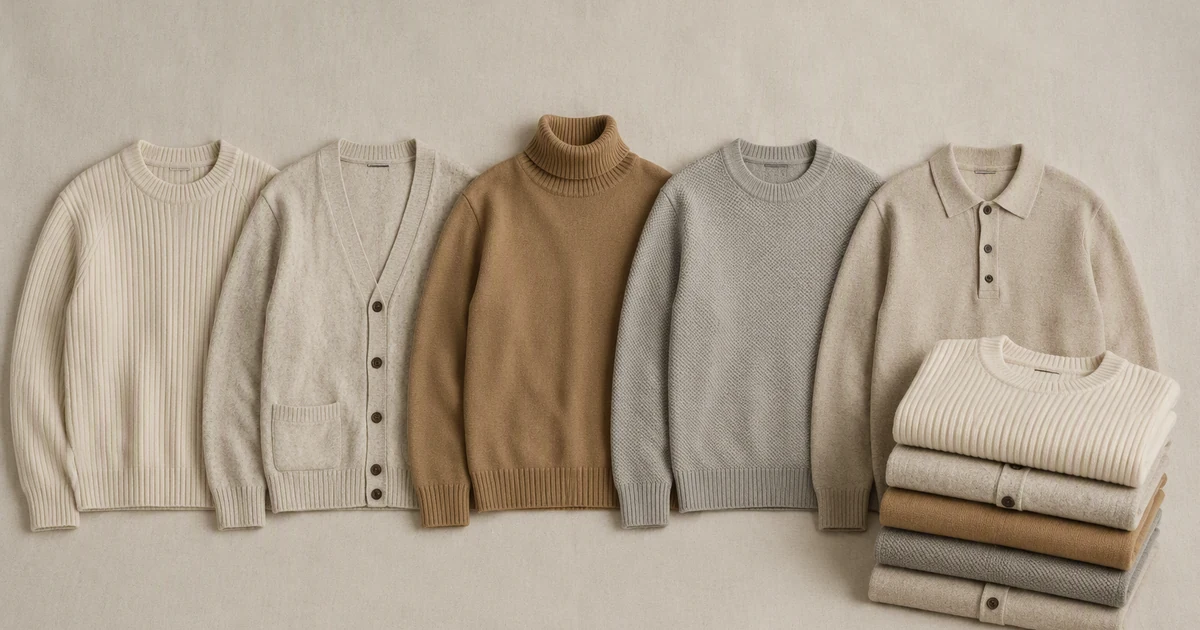
Sample to bulk is the stage where a design stops being a prototype and becomes a reproducible order. Brands planning the wider quantity and timing decisions can also review how to plan your first bulk knitwear order before approval. The sample proves the style; the bulk order has to reproduce it across yarn lots, colours, sizes, packing and a delivery window. The decisions that matter most are all made before knitting starts: freezing the approved specification, booking yarn in the right quantities, confirming the size run and the packing, and agreeing the quality checks that will be used at the bulk stage.
This is a general explanation of how the sample-to-bulk stage is usually handled in knitwear. It is not a quotation and it does not define the terms of any specific order. Quantities, quality checks, packing and delivery are confirmed in writing for each order after the sample is approved.
- What “sample to bulk” actually covers
- Why the sample stage and the bulk stage are different problems
- What to freeze before you place a bulk order
- Yarn booking and dye lots: the first real bulk decision
- What belongs in a bulk order confirmation
- Production milestones you should be able to ask about
- Quality gates at the bulk stage
- Fast sampling versus standard sampling
- What can still change between sample and bulk
- Brand and factory responsibilities
- A practical sequence: approval to delivery-ready
- Frequently asked questions
1. What “sample to bulk” actually covers
Buyers use the phrase in two different ways, and it helps to separate them. The first is a question about capability: can this factory take my style from an approved sample into a production order, or does it only make samples? The second is a question about process: once I approve the sample, what actually happens, in what order, and what am I committing to?
Both questions are answered by the same set of facts. A factory that can carry a style from sample to bulk can tell you, before you commit: how bulk yarn is booked and whether one dye lot can cover a colour; what the approved sample is frozen against; how the size run is placed into production; what is inspected and at what point; and what has to be confirmed in writing before the line starts producing your order.
If those answers are vague, the risk is not that the factory is dishonest. The usual outcome is drift: the bulk order looks almost like the approved sample, and the difference shows up in colour, weight, measurements after washing, or packing artwork.
This article deals with the bulk stage. If you are still at the sampling stage, start with the knitwear sampling process and the sample approval checklist.
2. Why the sample stage and the bulk stage are different problems
A sample is a small, controlled exercise. A bulk order is the same style produced across multiple colours, a size run, several production stages and a delivery window. Four things change at once.
Yarn
Sample yarn and bulk yarn are not the same purchase
A sample can be knitted from yarn that happens to be available. A bulk order needs enough yarn of one dye lot per colour, ordered ahead of the knitting schedule. This is the single most common reason a bulk order starts later than a brand expected.
Colour
Colour consistency becomes a production constraint
In a sample, one piece has to match a standard. In bulk, every piece across every size has to match that same standard, and colour has to stay consistent within the run. Colour count therefore interacts with order quantity.
Repetition
The style has to be reproducible, not just achievable once
A sample can be adjusted by hand to look right. Bulk production rewards a specification that is complete enough for the line to repeat it without judgement calls on the floor.
Logistics
Packing and paperwork are part of the order
Bulk adds packing, cartons, and label and hangtag artwork. These are decided at the order stage, not the sampling stage, and they are a frequent source of last-minute delay if they are left open.
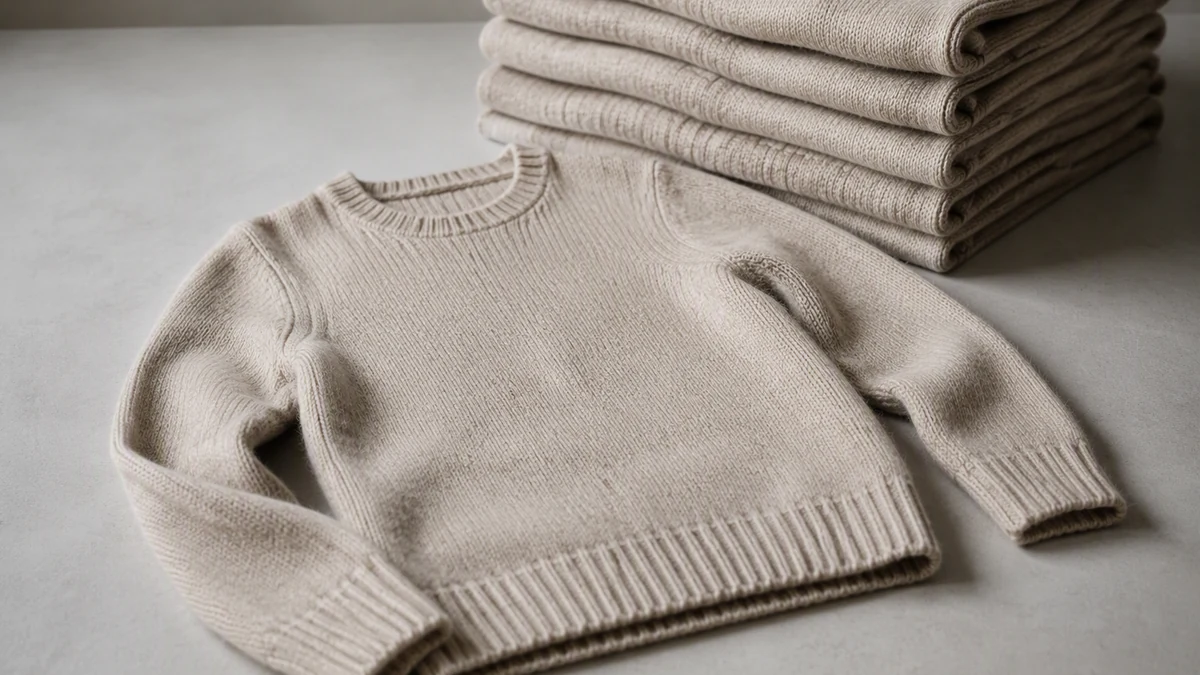
3. What to freeze before you place a bulk order
“Frozen” means both sides are working from the same written version. Anything left un-frozen at this point turns into an assumption later, and assumptions are where bulk orders go wrong. Eight items are worth closing before the order is placed.
01
Identify the exact piece that was approved — including which revision of it. If several rounds were made, name the approved one unambiguously.
02
The yarn actually knitted into the approved sample, not the yarn that was originally proposed. Substitutions during sampling are common and have to be recorded.
03
The gauge and structure as produced, plus any changes agreed at approval. Our own range runs from 3GG to 22GG; the specification records the gauge that was approved.
04
The measurement points, the target measurements and how the garment is measured. Agreeing the method matters as much as the numbers — see the sizing and fit guide.
05
Which sizes are ordered, in what ratio, and whether any size is a sample of its own. Size placement affects how the order is cut into production.
06
Each colour, and the standard it is measured against. The number of colours is one of the variables that interacts with minimum order quantity per colour.
07
Neck labels, care labels, hangtags, polybags and cartons — including artwork and who supplies what. Label content also has to satisfy labelling rules; see the US and EU labelling guide.
08
What is checked, when it is checked, and against which reference. This is agreed per order rather than assumed.
If two people at the factory read the specification, would they produce the same garment? If that is not clear, the order is not ready to be placed — regardless of how good the sample looks.
4. Yarn booking and dye lots: the first real bulk decision
Yarn is where the bulk order actually begins, and it is the part brands most often underestimate. Three properties of yarn drive the bulk schedule.
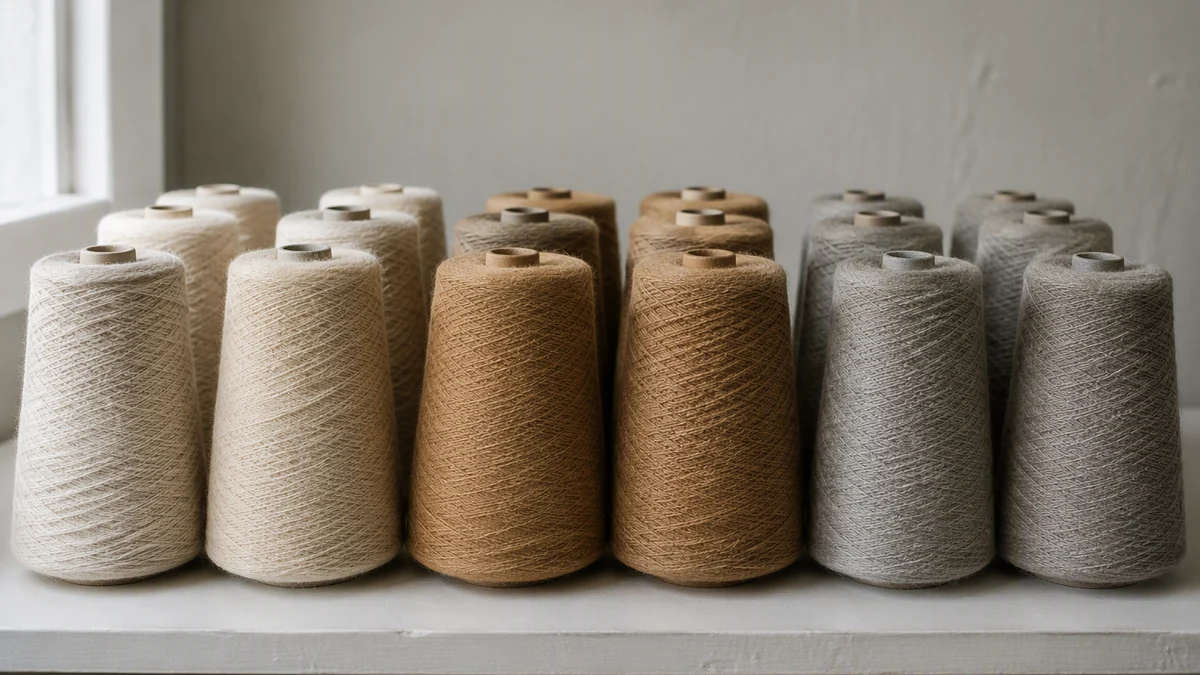
Dye lot
Yarn is dyed in lots. Within one lot, colour is consistent; across lots it can differ slightly even when the recipe matches. For a colour to be consistent across the whole order, the yardage has to be planned so that one lot covers the pieces being made in that colour.
Minimum quantities per colour
Because a colour usually has to be taken in a single lot, colour count and order quantity are linked. This is the mechanism behind low order minimums in knitwear: a small order in one colour is workable; the same quantity spread across many colours is not, because each colour has to be carried in its own yarn booking. Our adult knitwear programmes start from 100 pcs per colour, and the underlying reasons are set out in why knitwear MOQs start at 100 pieces per colour.
Lead time on yarn, not just on knitting
Knitting cannot start before yarn is in the factory and checked. If the yarn is a stock line it can be released quickly; if it is spun or dyed to order, the yarn is the longest pole in the schedule. This is why order lead time is confirmed after sample approval and depends on quantity, yarn availability, design complexity and the production schedule — rather than being a fixed number quoted up front.
5. What belongs in a bulk order confirmation
An order confirmation is the document the bulk stage is executed against. It does not have to be long, but it should leave nothing that the factory has to guess and nothing the brand will be surprised by later.
| Field | Why it matters at the bulk stage |
|---|---|
| Style reference and approved sample | Identifies the version being produced. Prevents a revision being reproduced by mistake. |
| Quantity by colour and size | Drives yarn booking, colour count and the size run. |
| Size ratio or size breakdown | Determines how the order is placed into production, not only how it is packed. |
| Colour standards per colour | Gives the factory a reference to match against, and gives you a basis for checking. |
| Yarn and composition | Locks the material to what was approved and tested. |
| Labels, hangtags and packing | Often the last item to be confirmed and the first to cause a delay if left open. |
| Confirmed delivery window | Confirmed after sample approval, based on quantity, yarn availability, complexity and schedule. |
| Quality check points | States what is inspected and when, so the brand is not relying on an assumption. |
| Frozen approvals | Records what was signed off and when. Later changes are then changes, not interpretations. |
If you are still assembling the documents the factory needs, the tech pack requirements guide lists what to send before sampling, and the same pack forms the basis of the bulk order.
6. Production milestones you should be able to ask about
You do not need to manage the factory’s floor. You do need to know which stage your order is in, because that is what tells you whether the delivery window is still realistic. A factory that can take a style from sample to bulk can answer these questions with a status, not a reassurance.
01
Yarn booked, received and verified against the confirmed colour and composition before knitting begins.
02
Panels and pieces knitted per size, from the same yarn lot for each colour.
03
Seams, trims and finishing of the garment construction.
04
Where hand-feel, relaxation and final appearance are set — and where measured dimensions can still move.
05
Checks taken while the order is still being made, when a correction is still cheap.
06
Finished pieces checked against the approved reference before packing.
07
Labels, hangtags, polybags and cartons applied to the confirmed artwork.
08
Cartons complete and marked, ready for the agreed shipping arrangement.
7. Quality gates at the bulk stage
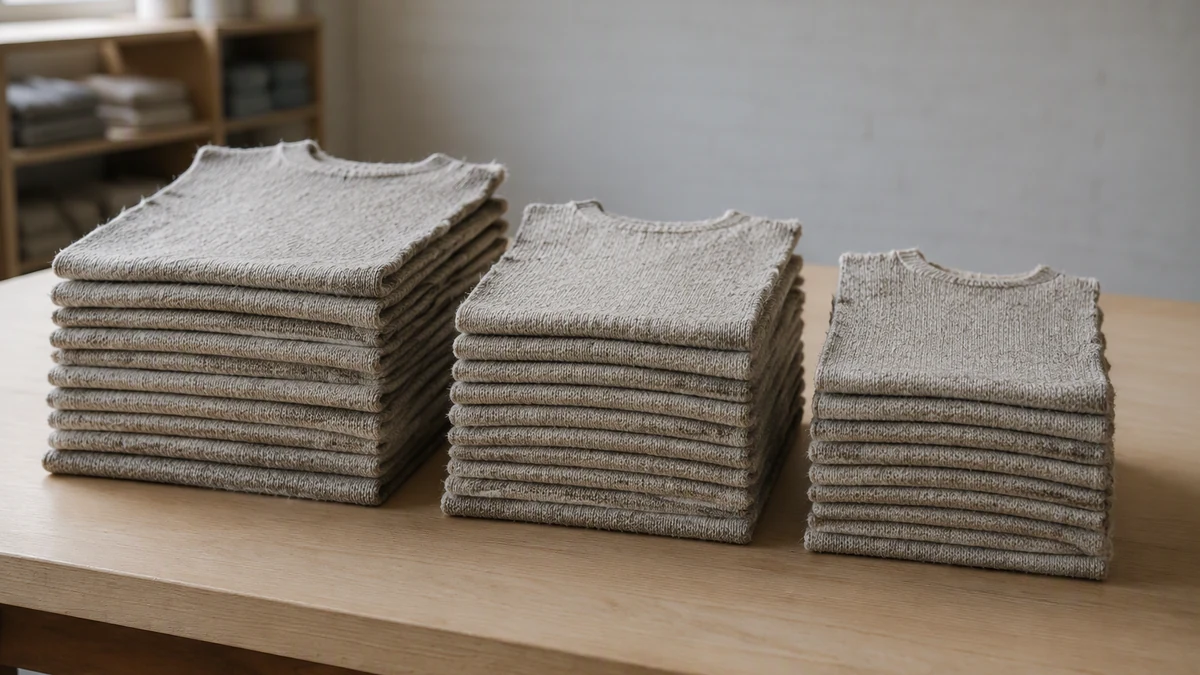
There is no single scheme that fits every order. What matters is that the checks are stated — which checks, at which point, against which reference — rather than being left to good intentions.
In-line is worth more than final
A defect found during knitting can be corrected by re-making a piece. The same defect found after packing is either a concession or a rework. This is why the useful question is not “will you inspect it?” but “what do you check before packing, and at what point in the run?”
Check against the approved sample, not against a description
The approved sample is the reference for hand-feel, structure, colour and appearance. Measurement checks are separate and use the agreed measurement method. Keeping the two distinct prevents the classic argument where both sides are right about a different thing.
Agree how defects are handled
Sorting is normal in knitted garments. What is worth agreeing in advance is what happens to the pieces that do not pass: rework, replacement, or exclusion from the shipment — and who decides. Agreeing this at order stage is far easier than negotiating it at the end.
8. Fast sampling versus standard sampling
“Fast sample” usually means one of two things, and they have different implications for the bulk order.
Shortest realistic route
Developing from an existing style
If the style already exists in the factory’s range and only the colour, yarn or branding changes, the sample is a variation rather than a development. This is the shortest route. Sampling normally takes 7–15 days, and the fastest projects can come in around 7 days depending on yarn availability and style complexity.
Development route
New construction, new yarn or new structure
A new gauge, a new knit structure, a jacquard or an intarsia panel has to be developed rather than repeated. The sample takes longer, and the bulk order inherits that development — which is why the specification matters more, not less, on this route.
Either way, a fast sample does not shorten the bulk stage by itself. What shortens the bulk stage is having yarn, colour standard, size run and packing settled at the point of approval.
9. What can still change between sample and bulk
Most sample-to-bulk disappointments are not failures of workmanship. They are one of a small number of recurring gaps. Each one has a cheap fix at the order stage.
| What drifts | Why it happens | What prevents it |
|---|---|---|
| Colour | Bulk yarn comes from a different dye lot than the sample yarn. | Book each colour in one lot; record the colour standard the sample was approved against. |
| Weight and hand-feel | The yarn was substituted during sampling and the substitution was not written down. | Record the yarn actually knitted into the approved sample, including composition. |
| Measured dimensions | Measurements were taken on a relaxed sample but on a freshly finished bulk piece, or the measurement method was never agreed. | Agree the measurement points and the method in writing, and note when the garment is measured. |
| Structure or gauge | A change that looked minor at approval was applied to the whole order. | Freeze gauge and structure by name, and treat later changes as changes. |
| Packing and artwork | Labels and hangtags are confirmed late, after the order is already made. | Close label, hangtag and carton artwork at order stage, with clear artwork files. |
| Size run | The size breakdown was assumed from the sample rather than specified. | Confirm the sizes and the ratio in the order confirmation. |
| Delivery window | The schedule was quoted before yarn was secured. | Confirm the delivery window after sample approval, when yarn position is known. |
10. Brand and factory responsibilities
The bulk stage runs smoothly when both sides know who owns what. This is the usual split; the exact division is confirmed per order.
| Item | Brand usually owns | Factory usually owns |
|---|---|---|
| Design and tech pack | Yes — the design intent and the specification | Technical feedback on what is producible |
| Size chart | Yes — the commercial specification | Producing and measuring to it |
| Colour standards | Approving the standard | Matching it and holding consistency in the run |
| Yarn booking | Confirming colour and composition | Sourcing, booking and verifying the yarn |
| Sample approval | Yes — sign-off and revision decisions | Making the sample and recording what changed |
| Production schedule | Confirming the delivery window | Placing the order in the schedule and reporting status |
| Labels and packing artwork | Supplying artwork and approving proofs | Applying it as approved |
| Quality checks | Agreeing what is checked and when | Performing the checks and handling what fails |
| Shipping and customs documents | Confirming the shipping arrangement | Export-ready packing and document preparation |
11. A practical sequence: approval to delivery-ready
Read end to end, the stage looks like this. The point of the sequence is that almost every item is decided before knitting starts — which is exactly what makes the bulk stage predictable.
01
Revisions happen; the approved one must be unambiguous.
02
Yarn, gauge, structure, measurement method, size run, colours, packing, quality checks.
03
Quantity by colour and size, delivery window, packing, and the checks for this order.
04
One lot per colour where consistency across the run matters.
05
Knitting, making up, washing and finishing — with in-line checks while correction is still cheap.
06
Against the approved sample and the agreed measurement method.
07
To the artwork confirmed at order stage.
08
Packed, marked and documented for the agreed shipping arrangement.
12. Frequently asked questions
What does “sample to bulk” mean in knitwear manufacturing?
It describes the stage between an approved sample and a finished production order. The sample proves the design; the bulk stage reproduces it across yarn lots, colours, a size run, packing and a delivery window. In practice the phrase is also used as a capability question — whether a factory can take a style from sample through to bulk production rather than only making samples.
How do I know if a factory can really take my style from sample to bulk?
Ask for the bulk-stage facts rather than a general assurance: how bulk yarn is booked and whether one lot can cover each colour, what the approved sample is frozen against, how the size run is placed into production, what is checked and at which point, and what has to be confirmed in writing before the line starts. A factory that works this way can answer all five with specifics.
Can I place a bulk order directly after the sample is approved?
Usually there is a short step in between: freezing the specification and confirming the order. Yarn, colour standards, measurement method, size run, packing artwork and the quality checks are closed in writing first. Doing this before knitting starts is what keeps the bulk order consistent with the sample.
Does a fast sample mean a faster bulk order?
Not by itself. A fast sample shortens the development part; the bulk stage is driven by yarn booking, production scheduling and packing. Sampling normally takes 7 to 15 days and the fastest projects can be around 7 days depending on yarn availability and style complexity, but the bulk delivery window is confirmed after sample approval based on quantity, yarn availability, complexity and the production schedule.
Why does colour count affect the minimum order quantity?
Because colour consistency across an order usually requires the pieces in one colour to be made from a single dye lot. Each additional colour therefore carries its own yarn booking, which is why order quantity and colour count are linked. Our adult knitwear programmes start from 100 pcs per colour.
What should be confirmed in writing before sampling starts?
The design intent, the yarn and composition, the gauge and knit structure, the measurement approach, the sizes and the target market. The tech pack is the usual vehicle, and the same pack becomes the reference for the bulk order. Sending a complete pack is the cheapest way to reduce sample rounds — see our tech pack requirements guide for the list.
Where to go next
If you are earlier in the process, these are the pieces that pair with this guide:
- The knitwear sampling process — how sample rounds, fit comments and revisions are handled.
- Sample approval checklist — what to check before you approve.
- Tech pack requirements — what to send before sampling.
- Why MOQs start at 100 pieces per colour — the yarn and colour mechanics behind order minimums.
- Custom knitwear cost guide — what drives a quotation once the specification is fixed.
- Knitwear gauge guide — how gauge choice affects weight, drape and cost.
Taking a style from sample to bulk?
Send your tech pack, approved sample photos or reference styles. We will confirm what we need to quote the bulk stage — yarn, gauge, colours, size run and packing — and set out the sample-to-production sequence for your order. See our OEM / ODM services or private label knitwear manufacturing.
Request a Quote & Let’s Create Together
Send us your tech pack, reference image or sample photo. Our team will review MOQ, yarn, gauge, sample timing and bulk production plan.
FAQ
What is your MOQ?
Apparel MOQ from 100 pcs / style. Pet Knitwear & Knit Accessories MOQ from 300 pcs / style.
How long does sampling take?
Sampling usually takes 7–15 days. The fastest sample lead time can be around 7 days depending on style complexity, yarn availability and workmanship.
How long is bulk production?
Bulk production usually takes 12–45 working days after sample approval, depending on order quantity, yarn, gauge, workmanship and packaging requirements. Typical ranges: 100 pcs 12–15 working days, 300 pcs 15–25 working days, 500–1,000 pcs 25–45 working days. Final schedule depends on yarn availability, stitch structure and order quantity.
Can you work from photos?
Yes. We can develop custom knitwear from tech packs, reference photos, original samples or design ideas.
Do you support custom labels and packaging?
Yes. We support private label, hangtag, care label, poly bag, carton packing and export-ready packaging.