Custom Knitwear Cost Guide: What Actually Drives Your Quotation
Cost & Quotation Structure Guide
Custom Knitwear Price Guide: Wholesale Costs, MOQ and Samples
Most knitwear price conversations go wrong before the first number is written, because two quotations are compared as if they priced the same garment. This guide explains what actually drives the cost of a custom knitwear order, what a quotation should itemise, and how to compare two quotes on a like-for-like basis.
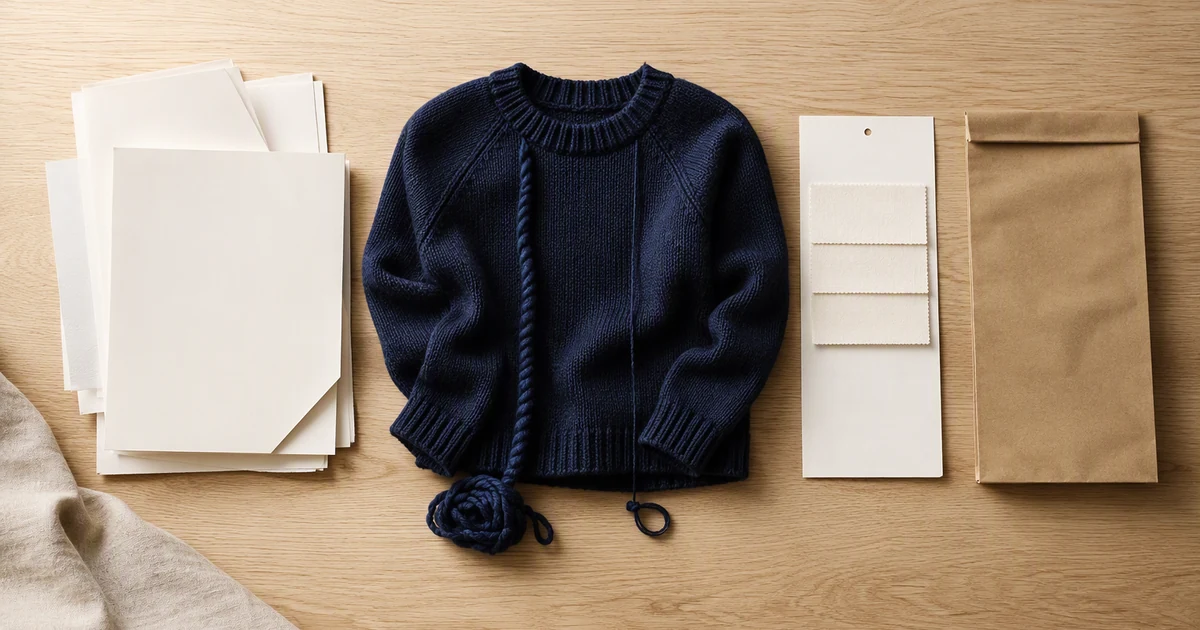
Custom knitwear cost is driven by the specification, not by the size of the order alone. Yarn, gauge and construction, colour and quantity structure, branding and packaging, development work and delivery terms each move the price independently — which is why two quotations for the “same” sweater are frequently not comparable until their assumptions are written down side by side.
A knitwear quotation usually arrives as a single figure per piece. That figure is the result of a series of decisions — some taken by the brand, some by the factory — and until those decisions are visible, the number cannot be evaluated, defended or improved.
This guide does not publish prices, and it should not: a real quotation depends on the yarn, the construction, the colour structure and the order conditions of one specific style. What it does publish is the structure behind the number, so that the next quotation you receive can be read rather than guessed at.
- Why custom knitwear prices are hard to compare
- What drives the price of a custom knitwear order
- How a wholesale knitwear quotation should be structured
- Yarn: usually the largest part of the price
- Gauge, stitch structure and garment weight
- MOQ and order structure: colours and quantity per colour
- Branding, trims and packaging costs
- Sample cost and development: what you pay before bulk
- Delivery terms, freight and duties in the total price
- Payment terms and how they price risk
- Why the lower unit price is often the more expensive option
- How to compare two wholesale quotations properly
- Knitwear price comparison checklist
- Custom knitwear price and MOQ: FAQ
1. Why Custom Knitwear Prices Are Hard to Compare
Two factories can quote the same reference sweater and return figures that look like competitors while describing two different products.
One may be pricing a finer yarn at a higher gauge with a denser stitch, a full size set and individual polybagging. The other may be pricing a heavier yarn at a coarser gauge, a trimmed size set and bulk packing. Neither is wrong. They simply priced different things — and the gap between the figures reflects the gap between the specifications, not the gap between the factories.
The practical consequence is that the useful question is rarely “who is cheaper”. It is “what is included in each figure, and are the two figures describing the same garment?” That question can only be answered when the specification is complete enough to price. If your development file is still open, the starting point is what to send a knitwear manufacturer before requesting a quote.
2. What Drives the Price of a Custom Knitwear Order
Knitwear cost behaves differently from cut-and-sewn garment cost, because the fabric is made at the same time as the garment. There is no separate fabric order to price, negotiate or waste — yarn goes in, a shaped knitted panel comes out. That single fact explains why yarn, gauge and garment weight sit at the centre of the cost structure.
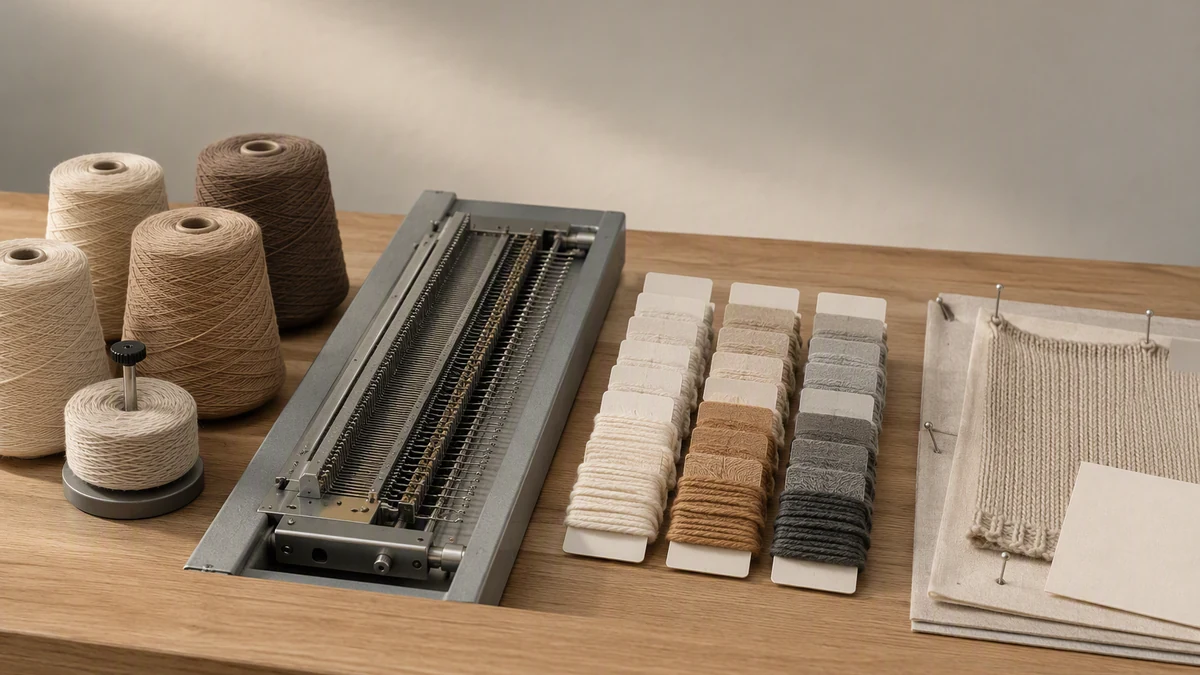
Five drivers account for the majority of the movement between quotations:
Yarn
Fibre composition, yarn count and sourcing availability set the baseline material cost and often the minimum purchase quantity behind the whole order.
Construction
Gauge, stitch structure, garment weight and shaping determine machine time per piece and how much the production run can be automated.
Order structure
Colour count and quantity per colour decide how fixed costs — setup, programming, yarn purchasing — are spread across the order.
Development
Pattern work, sample rounds and revisions are paid for once but shaped by how complete the specification was at the start.
A fifth driver sits outside the factory gate entirely: the delivery term. Freight, insurance, clearance and duties can change the landed cost of the same garment substantially, and they are frequently the reason two quotations that look identical are not. This is covered separately in section 9.
3. How a Wholesale Knitwear Quotation Should Be Structured
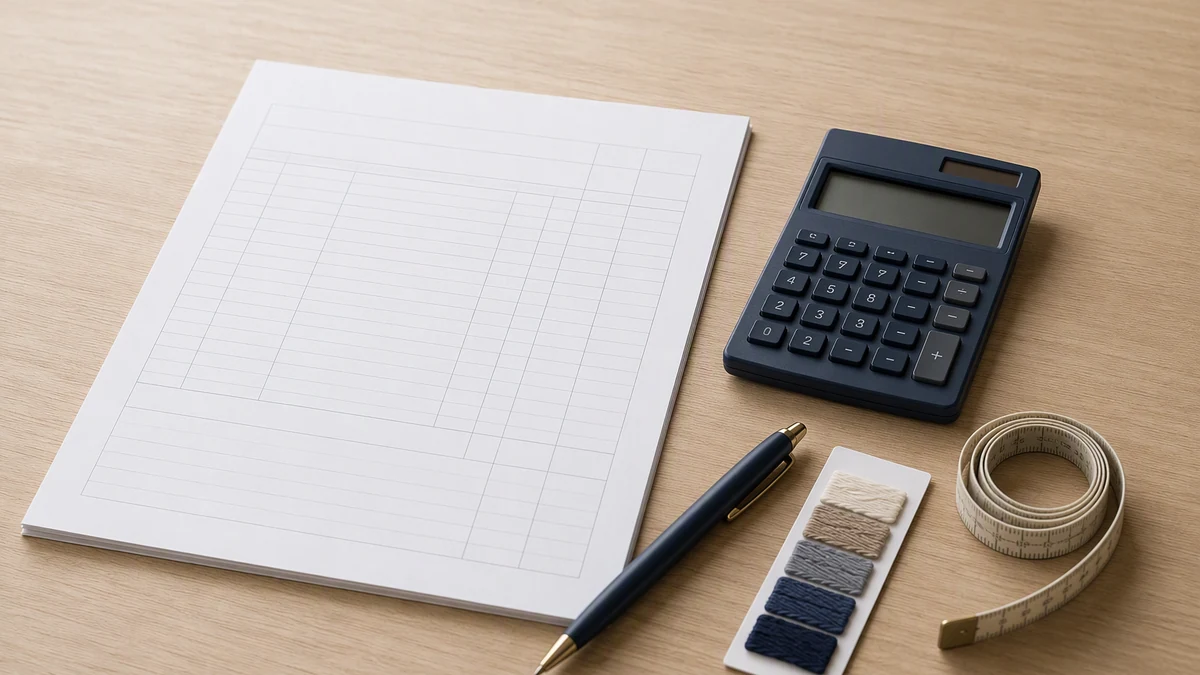
A quotation that arrives as a single figure cannot be compared, budgeted or improved. A useful quotation separates the items below, each with a stated basis.
| Line item | What it covers | Why it changes the price | What to confirm |
|---|---|---|---|
| Unit price basis | The per-piece figure for a defined specification | Every other row either includes, excludes or modifies it | Yarn, gauge, size set and packaging the figure assumes |
| Quantity structure | Total quantity, colours and quantity per colour | Determines how setup and yarn purchasing are absorbed | Whether the price holds across the colour breakdown given |
| Development & sampling | Pattern work, sample rounds, revisions | Either standalone or recoverable — the two behave differently in budget | What is charged separately and what is credited back |
| Branding & trims | Labels, hangtags, packaging, logo application | Added last in production and the most expensive to correct afterwards | Exactly which items are included in the unit price |
| Delivery term | Where the seller’s cost responsibility ends | Freight, insurance, clearance and duties sit on one side or the other | The named term and named place, stated explicitly |
| Payment terms | Deposit and balance structure | Terms price risk, and risk is priced into the figure somewhere | What is due at order, before shipment and on delivery |
| Lead time | Sampling and bulk windows | Tighter or seasonal windows can require production choices that cost more | Whether the lead time is quoted from order or from sample approval |
| Validity | How long the quoted basis holds | Yarn availability and shipping conditions both move | The date the figure expires and what happens after |
None of these rows requires a price to be published. They are the structure a quotation should arrive in, and asking for them costs nothing.
4. Yarn: Usually the Largest Part of the Price
In knitwear, yarn is not a component purchased against a fabric order — it is the garment. The yarn you specify determines hand feel, drape, recovery, season and appearance, and it also sets the material floor underneath every other cost decision.
What moves yarn cost
- Fibre composition — the blend is the single most influential choice, and it is usually the first one a buyer locks.
- Yarn count and spinning route — finer counts and more specialised spinning routes generally cost more and are available in fewer places.
- Colour and dyeing route — whether yarn is dyed to a colour reference, and how many colourways the order needs.
- Availability and lead time — a yarn that must be specially spun or dyed adds calendar time, and calendar time has a cost of its own when a season is fixed.
- Minimum purchase quantity — yarn is bought by weight, and the minimum a mill will produce frequently sets the floor beneath the whole order structure.
The point buyers miss most often
Yarn decisions taken early and loosely are the most expensive decisions to reverse, because they cascade into gauge, stitch density, garment weight, sampling and eventually the bulk order. A yarn change after sampling is not a substitution — it is a redevelopment. Where a brand is still deciding between yarn directions, it is usually cheaper to resolve that question before the first sample than to compare quotations built on different yarns.
Where sustainable or recycled yarn directions are part of the brief, they should be treated as a specification decision with its own sourcing lead time rather than an afterthought — see how to choose sustainable yarn for your sweater collection.
5. Gauge, Stitch Structure and Garment Weight
Gauge and structure are technical choices about the product — but they are also the main determinants of machine time, and machine time is where knitwear labour cost lives.
- Gauge — a coarser gauge produces a heavier, faster-knitting garment; a finer gauge produces a lighter, denser, slower-knitting one. CZ Knitwear develops across 3GG to 22GG, and the gauge range for a style should be agreed alongside the yarn rather than after it.
- Stitch structure — plain knit, rib, cable, jacquard and intarsia behave differently on the machine. Cables change garment weight and dimensional behaviour; jacquard and intarsia introduce artwork and programming work; openwork changes transparency and drape.
- Garment weight — driven by yarn count, stitch density and size, weight determines how much material each piece consumes. Two sweaters of the same silhouette at different weights are different cost objects.
- Shaping and panel construction — fully-fashioned shaping, linking and the number of separate knitted panels all affect how much handwork the garment requires after knitting. Whole-garment knitting removes linking work but places different demands on programming and machine availability.
Because these variables interact, they are best specified together. The knitwear gauge guide covers how gauge, yarn count and density combine, and choosing between jacquard, intarsia and cable explains what each structure demands in development.
6. MOQ and Order Structure: Colours and Quantity per Colour
This is the driver buyers underestimate most, and it is the one they can usually control fastest.
Part of the cost of any production run is fixed or semi-fixed: yarn purchasing, machine setup and programming, colour changes, and production planning. Those inputs do not shrink because the total quantity is small — they are simply spread across fewer pieces. Which means how an order is divided matters at least as much as how large it is.
| Order shape | What happens to fixed cost | Practical effect |
|---|---|---|
| Few colours, higher quantity each | Setup and yarn purchasing spread across more pieces per colour | The most efficient structure; usually the best value per piece for a given total quantity |
| Many colours, low quantity each | The same setup is repeated per colour, absorbed by fewer pieces | Materially higher cost per piece even at the same total order quantity |
| Long tail of sizes, thin per size | Grading and packing complexity rises without volume benefit | Adds handling cost; worth trimming if the size curve allows |
| Repeat of an approved style | Pattern and programming work already amortised | Reorders are structurally cheaper than first orders — a genuine advantage of owning the specification |
At CZ Knitwear, apparel production typically starts from 100 pcs per colour, while knit accessories, pet knitwear and baby & kids knitwear typically start from 300 pcs per colour. Those minimums are not a discount mechanism — they reflect where yarn purchasing and machine setup begin to make sense for the specification. The low MOQ knitwear guide explains what actually determines the workable minimum for a given style.
If a programme is pressed on budget, the question to ask first is not “can you reduce the price” but “can we concentrate the order”. Fewer colours at a workable quantity per colour usually moves cost further than any negotiation on the unit figure — and it does not require anyone to compromise on quality.
7. Branding, Trims and Packaging Costs
Branding is where cost is easiest to add and hardest to correct, because these items are applied late in production. A label sewn in the wrong place, a hangtag with a wrong fibre composition, or packaging that does not survive transit are all discovered after the garments exist.
- Labels — woven or printed neck labels, size labels and care labels. Care labels in particular carry fibre composition, washing and origin information, and they must match the actual production — not the intended one.
- Hangtags and product cards — artwork, printing, string or attachment method, and whether they are applied by the factory or by you.
- Logo application — embroidery, woven patch or print, each with different setup and per-piece implications.
- Packaging — folded garments, individual polybags, paper inserts, size stickers, carton configuration. Individually bagged retail-ready packing costs more to execute than bulk packing, and it is a genuine choice rather than a hidden mark-up.
The important discipline is to state the branding specification once, completely, in the development file, so it can be priced as part of the garment rather than added afterwards. Where a private label programme is being built, the workflow from specification to bulk production is covered in private label knitwear from tech pack to bulk production.
Where the order carries material or documentation requirements for a specific market, those requirements should be declared at the quotation stage rather than at packing. Documentation and material certification are available upon request at CZ Knitwear, and where a programme needs them the requirement should be named in the specification so it can be priced and scheduled properly.
8. Sample Cost and Development: What You Pay Before Bulk
Development cost is paid before any garment is sold, which is why it is judged emotionally rather than commercially. It is worth separating three things that buyers often treat as one.
- Pattern and specification work — translating a design into a workable knitted construction. Paid once, reusable across seasons if you own the specification.
- Sample rounds — each physical sample carries yarn, machine time, making-up and shipping. The number of rounds is driven less by the factory than by how complete the specification was at the start.
- Revision handling — recording and applying comments consistently. Cheap when it is disciplined, expensive when comments arrive informally and contradict each other.
At CZ Knitwear, sampling typically takes 7–15 days depending on style complexity, with faster projects possible where yarn is available and the construction is straightforward. Bulk production runs on tiered working-day lead times after sample approval, scaling with order quantity:
| Order quantity | Bulk lead time after sample approval |
|---|---|
| 100 pcs | ≈ 12–15 working days |
| 300 pcs | ≈ 15–25 working days |
| 500–1,000 pcs | ≈ 25–45 working days |
Lead times are affected by yarn availability and lead time, construction and order complexity, and they are quoted from sample approval rather than from order placement — a distinction worth insisting on, because it is the difference between a plan and an estimate. The full sequence is set out in the knitwear sampling process, and the checks that gate bulk production are in the sample approval checklist.
9. Delivery Terms, Freight and Duties in the Total Price
Two factories can quote the same garment at the same ex-works figure and deliver completely different landed costs. The difference is the delivery term.
Delivery terms define where the seller’s responsibility ends and the buyer’s begins — who arranges and pays for transport, insurance, export clearance, import clearance and duties. The internationally recognised framework for these terms is published by the International Chamber of Commerce (ICC Incoterms rules), and the named term should appear on every quotation.
For knitwear moving into the target markets, three cost elements sit outside the factory price:
- Freight and insurance — air and sea behave very differently on both cost and calendar time, and the choice is often decided by the season rather than the budget.
- Import duties and tariff classification — knitted apparel is classified under its own tariff headings, and the applicable rate depends on classification and origin. United States rates and statistical categories are published in the Harmonized Tariff Schedule.
- Rules of origin — preferential arrangements can change the applicable duty, but only where the origin requirements are met and evidenced. The EU position is set out by the European Commission on rules of origin for goods.
The practical rule: compare quotations on the same delivery term, or do not compare them at all. A figure quoted on one basis against a figure quoted on another is not a price comparison, it is a category error — and it is one of the most common reasons a brand believes it has found a cheaper supplier and later discovers it has not.
10. Payment Terms and How They Price Risk
Payment terms are usually discussed after price, as if they were unrelated. They are not. Terms allocate risk between buyer and seller, and risk is always priced somewhere — either visibly in the figure, or invisibly in the willingness to commit capacity.
International trade offers a recognised spectrum of payment methods, each sitting at a different point between buyer protection and seller protection — from cash in advance, through letters of credit and documentary collections, to open account. The United States Commercial Service sets out how these methods allocate risk in its guide to methods of payment.
For a first order, the practical questions are simpler than the theory:
- What falls due at order, before shipment and on delivery?
- What happens to the deposit if the specification changes after it is paid?
- Does the term change the quoted figure, and if so, on what basis?
Asking these three questions does not require either side to publish anything sensitive, and it prevents the most common late-stage dispute: a quotation that was priced on one payment basis and negotiated on another.
11. Why the Lower Unit Price Is Often the More Expensive Option
A lower unit figure is not automatically a better outcome, because the figure is only as meaningful as the specification it prices. A quotation can come in lower for reasons that are entirely legitimate and entirely unsuitable:
- A lighter yarn or a different fibre blend that changes hand feel, drape and how the garment wears
- A simpler construction or a narrower size set that changes the fit your customers already buy
- Development excluded from the price and billed separately, so the saving is recovered later
- A different packaging standard that shifts work back to you at the destination
- A delivery term that leaves freight, insurance and duties with the buyer
- Documentation or compliance requirements outside the quoted scope
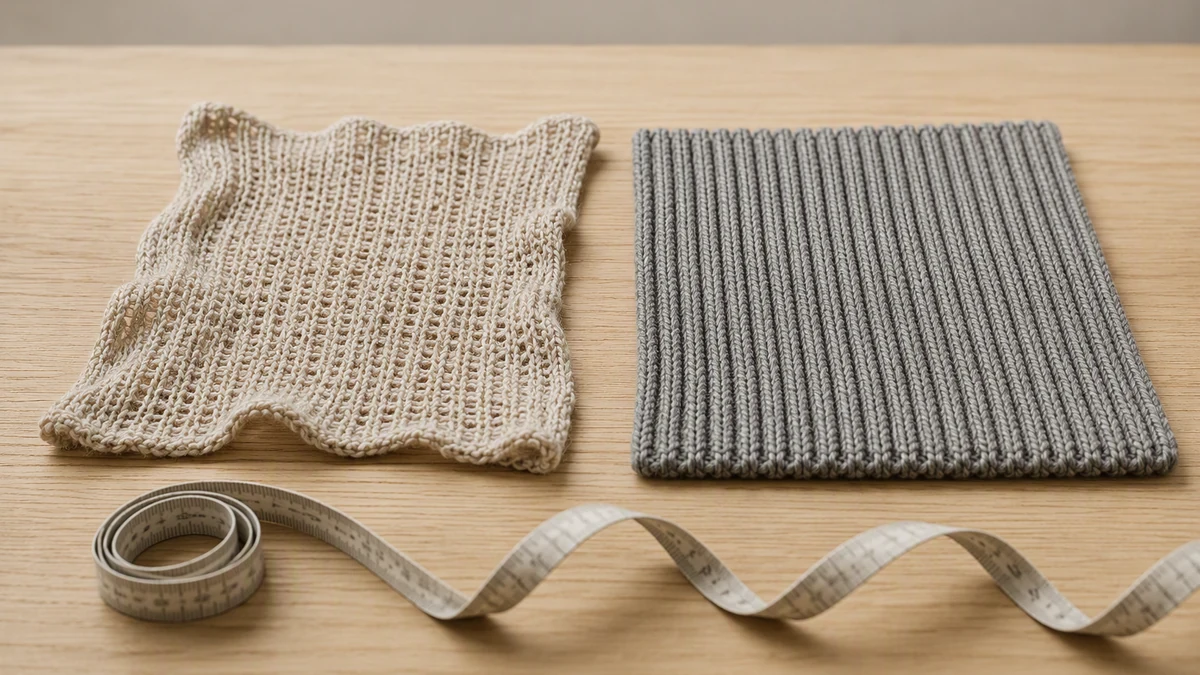
The correct comparison is therefore not unit price against unit price. It is total cost of delivering the specification you actually need — including the cost of the first bulk order having to be repeated because the reference garment and the production garment did not match.
That is where the cheapest quote becomes the most expensive one: not at the point of purchase, but at the point of discovery. The guide to evaluating knitwear quality sets out how to test quality claims against evidence rather than against price, and the comparison of OEM, ODM and private label models explains how the chosen model changes which side carries development cost in the first place.
12. How to Compare Two Wholesale Quotations Properly
This sequence takes less time than a single unnecessary production run.
Write down the yarn, gauge, stitch structure, garment weight, size set and packaging that both quotations are supposed to price. If the two suppliers were briefed differently, fix the brief before comparing anything.
Give both suppliers the same colour breakdown and the same quantity per colour. A quotation built on a different colour structure is not comparable, however similar the total quantity looks.
Development, sample rounds, labels and hangtags, packaging, documentation and delivery terms. This is where apparent price gaps usually shrink or reverse.
Same named delivery term, same payment structure, same stated validity period. Only then are the two figures describing the same transaction.
Add development, samples, unit cost at the actual colour and quantity structure, packaging, documentation and delivery to the same destination. Compare that number, not the headline unit price.
Steps 1 and 3 carry most of the value. They are also the two steps buyers skip when they are under time pressure — which is precisely when a comparison error becomes expensive.
13. Knitwear Price Comparison Checklist
Before accepting any quotation, confirm each line is answered:
- Specification basis — yarn, gauge, stitch structure, garment weight and size set the figure assumes
- Order structure — colours, quantity per colour, and whether the price holds across that breakdown
- Development — what is charged separately, what is included, and what is credited against the bulk order
- Sample rounds — how many are included before further rounds are billable
- Branding and trims — which labels, hangtags and logo applications are inside the unit price
- Packaging — folded, individually bagged or retail-ready, and who applies size and price labelling
- Delivery term — the named term and named place, stated explicitly on the quotation
- Payment structure — what is due at order, before shipment and on delivery
- Lead time basis — measured from order placement or from sample approval
- Documentation — which material or compliance documents are required and who provides them
- Validity — how long the quoted basis holds and what triggers a revision
- Revision policy — what happens to price and schedule if the specification changes mid-order
A supplier who can answer all twelve is a supplier who has priced a real garment. A supplier who cannot answer four of them has priced an assumption — and assumptions are the most expensive thing in the order.
14. Custom Knitwear Price and MOQ: FAQ
What drives the cost of a custom knitwear order?
The main drivers are the yarn specified, the gauge and stitch structure, the garment weight and size set, the number of colours and the quantity produced per colour, the branding and packaging specification, the development and sampling work required, and the delivery terms. Total order quantity matters less than how that quantity is distributed across colours and sizes, because yarn purchasing and machine setup are driven by colour and specification.
Why do two suppliers quote very different prices for the same sweater?
In most cases the two quotations are not pricing the same product. Yarn composition and count, gauge, stitch density, garment weight, size set, colour allocation, trims, labelling, packaging and order conditions can all differ. Until those assumptions are aligned in writing, the two figures are answers to different questions rather than competing prices.
Does a lower unit price always mean a lower total cost?
Not necessarily. A lower quoted unit price can sit on a lighter yarn, a simpler construction, a narrower size set or a different packaging standard, and it may exclude development work, revision rounds or documentation. The relevant comparison is the total cost of delivering the specification you actually need, including the cost of resolving problems after bulk production begins.
How does order quantity affect the price per piece?
Quantity affects price mainly through fixed and semi-fixed inputs: yarn purchasing minimums, machine setup, pattern and programming work, and production planning. Because these are spread across the order, the quantity produced per colour usually matters more than the total quantity. A programme with many colours at low quantity per colour carries more setup proportionally than the same total quantity concentrated in fewer colours.
Are sampling and development costs included in the bulk price?
This varies and should always be confirmed in writing. Sampling, pattern development and revision rounds may be quoted separately, absorbed into the bulk price, or credited against the order. The important point is to know before development starts which items are standalone and which are recoverable, so the total programme cost is visible rather than discovered later.
Does the delivery term change the quoted price?
Yes. Delivery terms determine which costs sit with the seller and which sit with the buyer, including freight, insurance, export and import clearance and duties. Two quotations can be identical ex-works and still produce very different landed costs. Terms should be stated explicitly on every quotation and compared on the same basis.
Related Knitwear Manufacturing Resources
- What to send a knitwear manufacturer before requesting a quote — the inputs that make a quotation priceable
- Knitwear tech pack requirements — what a complete specification contains
- Low MOQ knitwear manufacturing — what determines the workable minimum
- Knitwear gauge guide, 3GG to 22GG — how gauge and density interact
- OEM vs ODM vs private label knitwear — who carries development cost under each model
- The knitwear sampling process — from tech pack to approved production sample
- Knitwear sample approval checklist — the gate before bulk production
- Evaluating knitwear quality — testing quality claims against evidence
- Whole-garment vs traditional knitting — how construction method changes material and labour
- OEM / ODM knitwear development — how we develop from brief to bulk
- Our process — the six-step development workflow
Get a Custom Knitwear Price Against Your Specification
Send us your tech pack, reference garment or reference image along with the yarn direction, target gauge, colour structure and expected quantity per colour. We will come back with the development route, the workable order conditions and a quotation itemised against the specification — so the number can be read, compared and budgeted rather than guessed at.
A specific quotation depends on the yarn, construction, colour structure and order conditions of your style, so it has to be calculated per style and quantity. What we will do is make the basis of that calculation visible. Founded in 2006, CZ Knitwear develops and manufactures custom sweaters, cardigans, knit tops and knit accessories across 3GG–22GG gauges for brands in Europe and North America.
Request a Quote — Itemised Against Your Specification
Share your tech pack, reference image or sample photo with the yarn, gauge, colour and quantity structure you have in mind. We will confirm the development route and the workable order conditions, and quote with the basis stated. Request a production quote or contact us on WhatsApp.
Request a Quote & Let’s Create Together
Send us your tech pack, reference image or sample photo. Our team will review MOQ, yarn, gauge, sample timing and bulk production plan.
FAQ
What is your MOQ?
Apparel MOQ from 100 pcs / style. Pet Knitwear & Knit Accessories MOQ from 300 pcs / style.
How long does sampling take?
Sampling usually takes 7–15 days. The fastest sample lead time can be around 7 days depending on style complexity, yarn availability and workmanship.
How long is bulk production?
Bulk production usually takes 12–45 working days after sample approval, depending on order quantity, yarn, gauge, workmanship and packaging requirements. Typical ranges: 100 pcs 12–15 working days, 300 pcs 15–25 working days, 500–1,000 pcs 25–45 working days. Final schedule depends on yarn availability, stitch structure and order quantity.
Can you work from photos?
Yes. We can develop custom knitwear from tech packs, reference photos, original samples or design ideas.
Do you support custom labels and packaging?
Yes. We support private label, hangtag, care label, poly bag, carton packing and export-ready packaging.