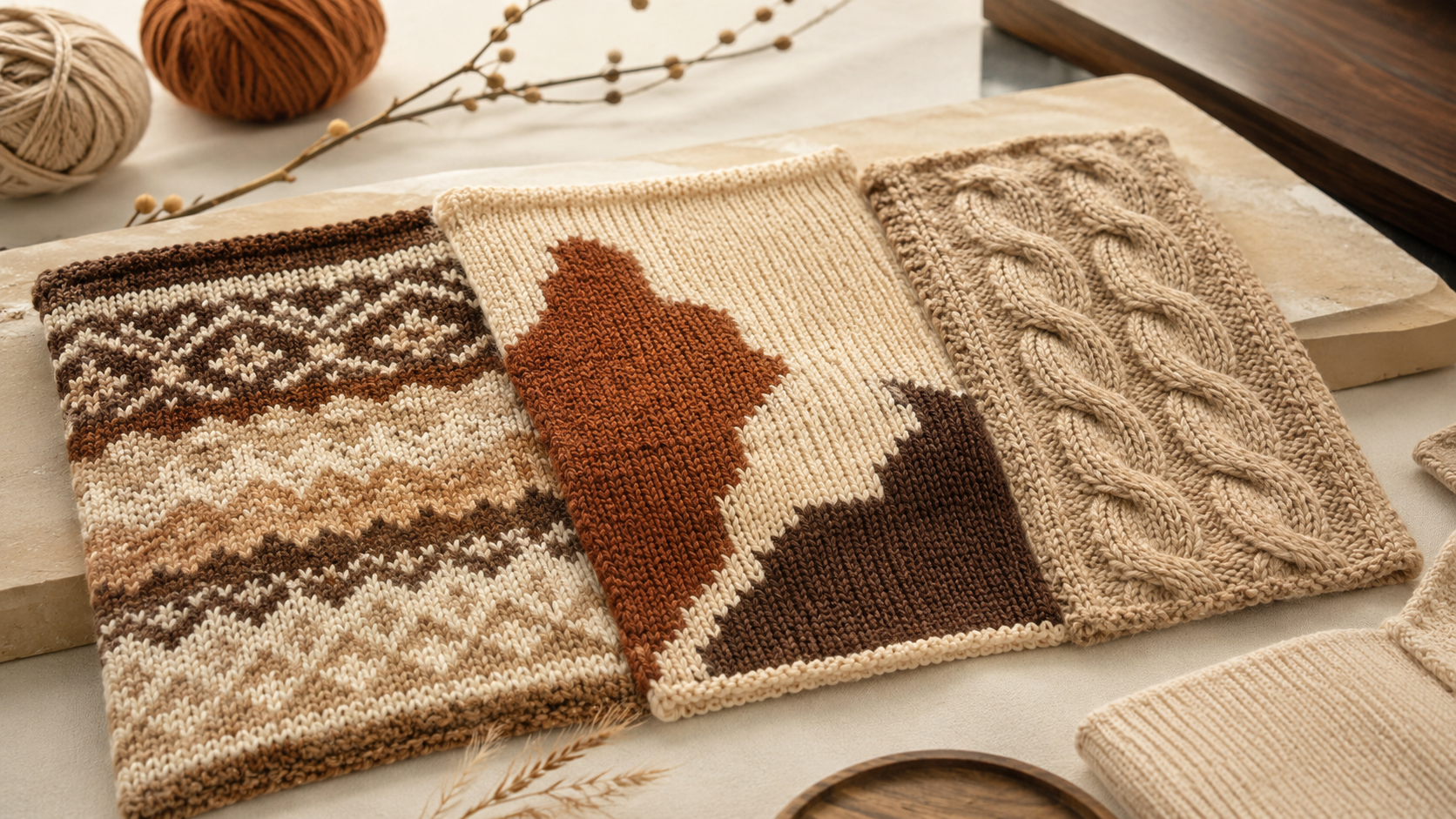
Knitwear design is shaped not only by silhouette and yarn, but also by technique. A sweater can look clean and minimal, richly textured or graphically expressive depending on the knitting structure selected during development.
For brands planning an OEM / ODM knitwear collection, choosing the right technique is both a creative decision and a production decision. Jacquard, intarsia and cable knit each create a different visual language, require different development logic and affect cost, sampling time and bulk production planning.
The best technique is not always the most complex one. It should support the intended product story, target customer, yarn direction, gauge, MOQ, season and retail positioning. When design and production feasibility are aligned, the final sweater becomes much more stable and commercially realistic.
Jacquard: Pattern-Rich and Commercially Versatile
Jacquard knit is often chosen for repeating motifs, geometric layouts, seasonal graphics and all-over pattern stories. It allows multiple colors to be integrated into the knitted fabric and works well for commercial sweaters that need visual interest without requiring hand-applied embellishment.
From Nordic-inspired winter styles to playful graphic patterns, jacquard can adapt to many themes. It is especially useful when a brand wants a consistent pattern across a sweater body, sleeve or full garment.
- Best for: Repeating patterns, commercial graphics, seasonal motifs and all-over designs.
- Development focus: Color count, motif scale, gauge, yarn thickness and reverse-side structure.
- Production note: Digital artwork should be checked at real knitted scale because stitch translation can soften fine details.
Intarsia: Bold Placement Graphics and Cleaner Color Blocks
Intarsia is often used when the design requires larger areas of color placement rather than repeated all-over motifs. It is a strong choice for graphic sweaters, abstract shapes, statement artwork and premium styles where the pattern placement is central to the product identity.
Intarsia can create a cleaner visual result in certain design directions because each color section is individually worked rather than repeated across the whole garment in the same way as some jacquard structures. However, this technique often requires more careful development and can be more time-intensive depending on the artwork.
- Best for: Large placement graphics, abstract shapes, color blocking and statement sweaters.
- Development focus: Artwork placement, color transitions, yarn tension and motif balance.
- Production note: Complex intarsia designs may need more sampling time and closer technical review.
For graphic knitwear, brands should review whether the artwork is better suited for jacquard, intarsia, embroidery, print or mixed techniques before sampling. The most beautiful digital artwork is not always the most practical knitted solution.
Cable Knit: Texture, Depth and Timeless Appeal
Cable knit is different from jacquard and intarsia because its main effect comes from texture rather than color arrangement. It creates raised, sculptural patterns that can feel classic, cozy and premium.
Cable structures are especially popular for autumn and winter collections, cardigans, heritage-inspired sweaters, chunky pullovers and tactile premium knitwear. The visual impact depends on yarn choice, gauge and pattern scale.
- Best for: Textured sweaters, cozy cardigans, heritage styles and autumn / winter collections.
- Development focus: Yarn softness, cable depth, garment weight, drape and finishing.
- Production note: Chunky cable structures can increase garment weight and machine time, so cost and comfort should be reviewed together.
Quick Comparison: Which Technique Fits Your Design?
Pattern Story
Suitable for repeating motifs, geometric layouts, commercial seasonal graphics and multi-color pattern sweaters.
Placement Graphic
Suitable for large color blocks, abstract artwork, premium statement sweaters and strong visual focal points.
Texture & Depth
Suitable for tactile, cozy, classic and heritage-inspired styles where raised texture is the main design value.
How to Decide Which Technique Fits Your Brand
The right decision depends on the role the garment plays in the collection. If the objective is a festive, pattern-led sweater with broad appeal, jacquard may be the best solution. If the design calls for a focal graphic or abstract composition, intarsia may support that more effectively. If the goal is texture, warmth and a heritage-inspired look, cable knit is often the strongest fit.
Budget and timeline also matter. More complex graphics may require additional development time and closer sample review. Texture-driven styles may require attention to yarn softness, weight and finishing. A manufacturer should review the design from both an aesthetic and production perspective so the final choice remains realistic.
Sampling and Swatch Review Are Essential
Brands should not rely on design sketches alone when choosing knit techniques. Swatches and sample trials allow the team to compare stitch definition, hand feel, drape and visual impact before moving into bulk production.
This is especially useful when a brand is choosing between two similar directions or trying to balance cost with design ambition. A swatch can quickly show whether a motif is too small, a cable is too heavy, or a yarn is not suitable for the selected structure.
Matching Technique to Market Positioning
A final consideration is customer expectation. Some buyers respond strongly to texture and craftsmanship, which makes cable knit a powerful option. Others are drawn to novelty, pattern and statement surfaces, making jacquard or intarsia more commercially relevant.
At CZ Knitwear, we work with brands to evaluate suitable knitting techniques based on design references, MOQ, target pricing and intended market. When technique, yarn and silhouette are aligned, the final sweater becomes much more than a garment. It becomes a clear expression of brand direction.