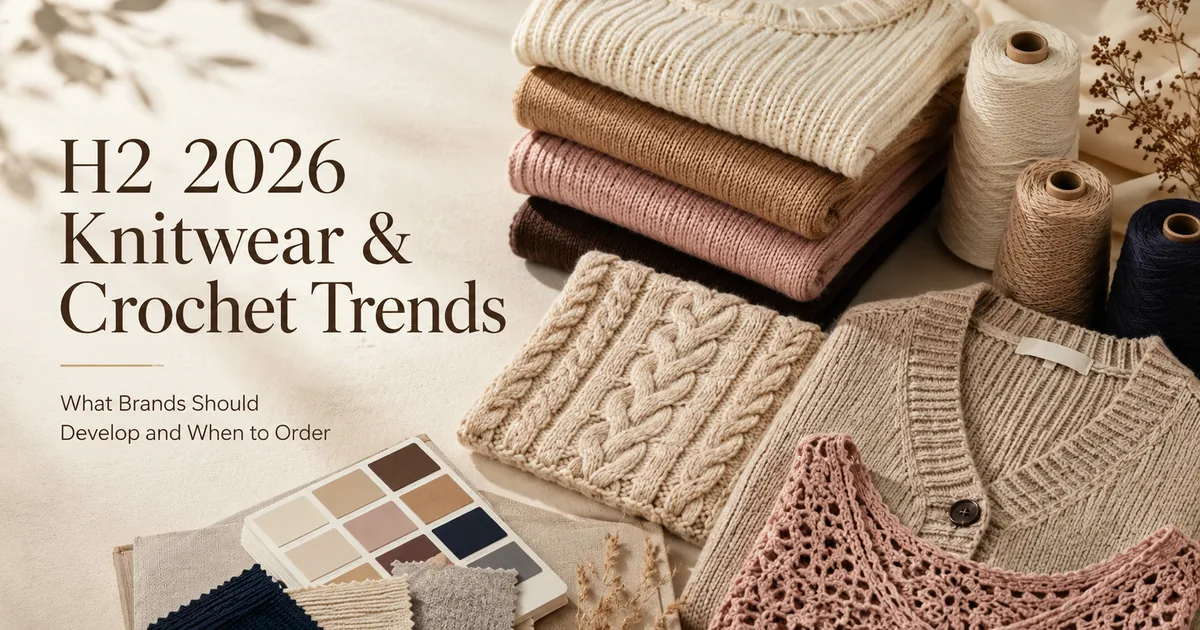
The second half of 2026 will reward knitwear brands that balance commercial clarity with stronger texture, softer hand feel and more seasonally focused development planning. For buyers and private label brands, the biggest opportunity is not only choosing the right trend direction, but also locking the order timeline early enough to avoid missing the best selling window.
As we move into the July to December selling season, demand is leaning toward product that feels practical, refined and easy to style. Across custom sweaters and cardigans, knit tops and crochet pieces, dresses, accessories and boutique lifestyle capsules, customers are responding well to textures that look premium, silhouettes that feel wearable and color stories that can move from late summer into autumn and winter.
For OEM and ODM buyers, this means H2 2026 is less about over-designed novelty and more about commercially usable knitwear. Buyers are looking for pieces that photograph well, feel comfortable, fit multiple retail channels and can be developed with reasonable sampling and production lead times.
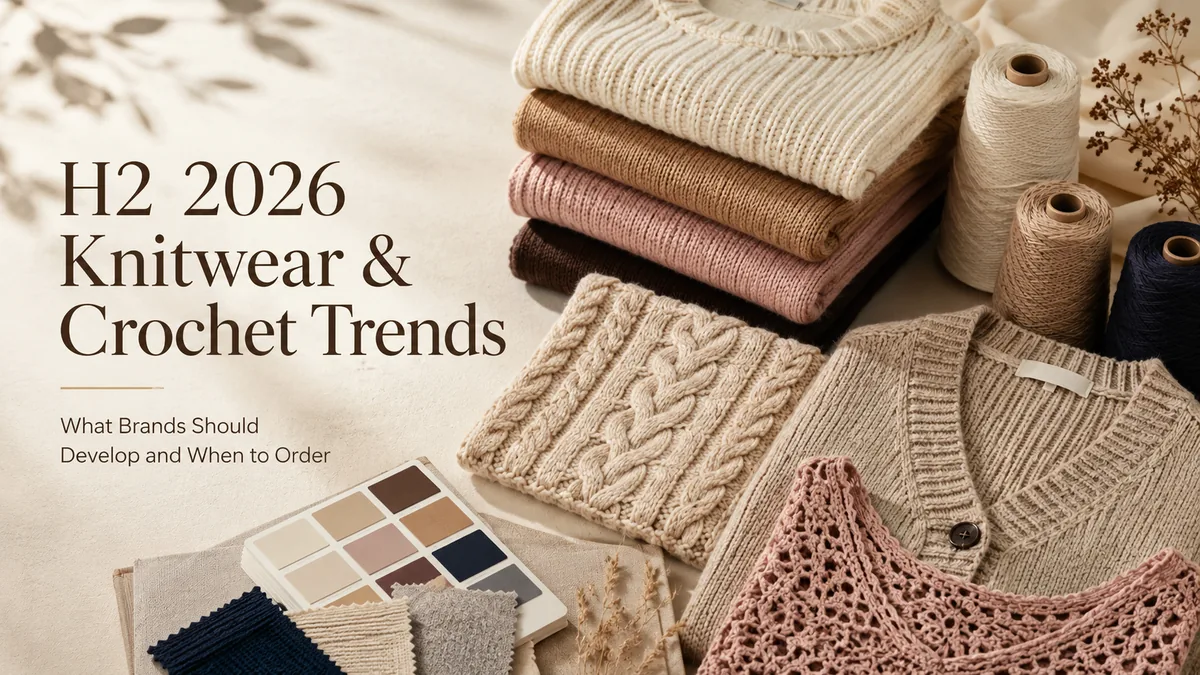
What will matter most in H2 2026
The strongest direction for the second half of the year combines transitional knitwear for late summer and early autumn with richer, more textured product for the colder selling period. Lightweight crochet tops, fine-gauge knit tops and soft matching sets are still relevant for warm-weather retail. At the same time, cables, ribs, brushed textures and cozy cardigans become increasingly important for autumn and holiday programs.
For most brands, the H2 assortment should not be treated as one single season. It is better to split the plan into two commercial phases: late summer / early autumn and mid-autumn / holiday winter. This makes development, merchandising and delivery timing much easier to manage.
Key knitwear and crochet trends for the second half of 2026
Fine-Gauge Polished Basics
Short-sleeve knit tops, knit polos, fitted pullovers and lightweight cardigans continue to work well for late summer and transitional retail. These styles offer easy layering and broad customer appeal.
Crochet and Openwork Texture
Crochet tops, open stitch structures, scallop edges and breathable handcrafted looks remain strong, especially for boutique collections, resort-inspired drops and feminine capsule programs.
Textured Autumn Knits
Chunky cables, rib structures, half-zip sweaters, zip cardigans and soft textured surfaces will be core directions for the autumn and holiday selling season.
Coordinated Sets and Layering
Matching knit sets, cardigan-and-dress pairings and coordinated tops with bottoms help brands create stronger merchandising stories and higher basket value.
Quiet Luxury Colors
Oatmeal, cream, camel, soft gray, chocolate, burgundy, navy and muted green continue to feel premium. These colors are especially useful for private label and versatile seasonal collections.
Giftable Winter Pieces
Cardigans, knit dresses, scarf-led accessories and cozy sweater stories become more important in Q4 when buyers start thinking about gifting and seasonal promotions.
How buyers should plan the H2 2026 assortment
For brands selling into late summer and autumn, the smartest strategy is to divide development into a lighter first wave and a warmer second wave. The first wave can focus on fine-gauge tops, short-sleeve sweaters, crochet pieces and versatile cardigans. The second wave should lean into cable pullovers, mid-weight sweaters, knit dresses, textured cardigans, knit accessories and holiday-friendly silhouettes.
This two-wave approach gives buyers more flexibility. It also helps avoid one common mistake: placing all styles too late and then forcing summer development and winter production into the same calendar window.
- Wave 1: Late summer to early autumn styles such as knit polos, crochet tops, short-sleeve sweaters and lighter cardigans.
- Wave 2: Autumn to holiday styles such as cable pullovers, zip cardigans, sweater dresses, cozy sets and gifting-focused knitwear.
- Merchandising benefit: Better visual storytelling, smoother delivery and more practical inventory flow.
- Production benefit: Easier yarn planning, clearer sample approval timing and reduced late-season pressure.
Recommended ordering timeline for customers
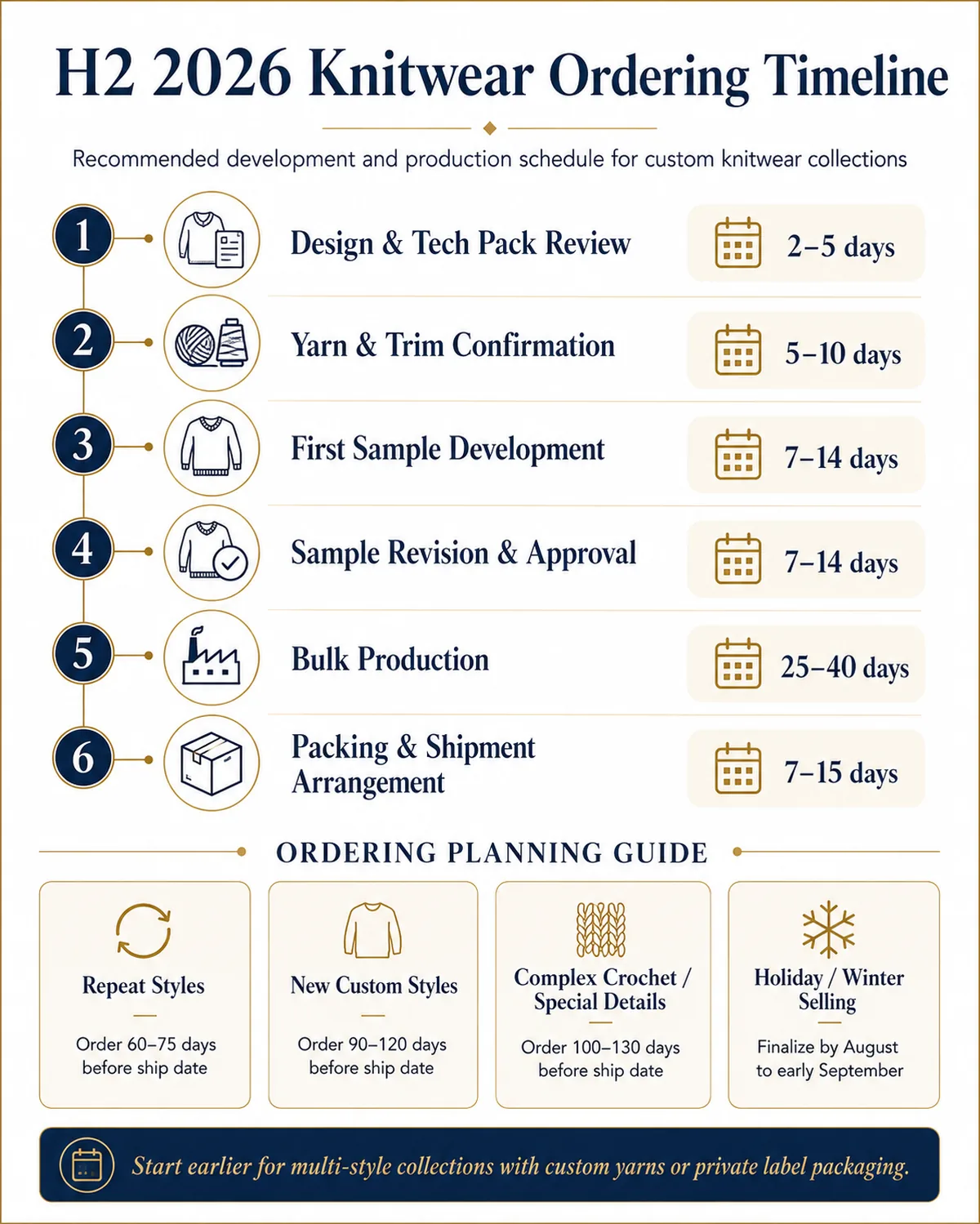
Order timing is now just as important as product direction. For OEM / ODM knitwear manufacturing, brands should plan backward from the target shipping or in-store date. The more customized the style is, the earlier the order should be started.
Standard lead-time reference
- Design and tech pack review: around 2–5 days
- Yarn and trim confirmation: around 5–10 days
- First sample development: around 7–14 days
- Sample revision and approval: around 7–14 days
- Bulk production: around 25–40 days after approval
- Packing and shipment arrangement: around 7–15 days depending on shipping plan
Repeat Styles
If the style has already been developed before and only needs color or minor updates, buyers should still place the order at least 60–75 days before the target ship date.
New Custom Styles
For a completely new style with fresh sampling, fit review and material confirmation, the safer timing is 90–120 days before the target ship date.
Complex Crochet or Special Details
If the design includes crochet work, handfeel-sensitive yarns, multiple colors or more complex construction, buyers should allow 100–130 days for smoother execution.
Holiday / Winter Selling
For October to December selling, it is best to finalize custom bulk orders no later than August to early September, especially for brands with multiple SKUs.
Suggested order calendar for H2 2026
To make planning easier, here is a practical guideline for customers working on second-half sales.
- For August–September selling: focus on repeat or already-developed styles. New custom programs may be too tight unless very simple.
- For October–November selling: sampling should ideally be completed in July or early August, with bulk confirmed shortly after approval.
- For November–December holiday selling: buyers should lock design, yarn and quantities by August or early September whenever possible.
- For early Spring 2027 lightweight knits: development can begin from September onward, especially for crochet tops, fine-gauge knitwear and transitional cardigans.
If your collection includes multiple categories such as sweaters, crochet tops, knit dresses and accessories, it is better to start earlier than the minimum timeline. Multi-style developments almost always require more coordination on yarn sourcing, sample comments and production scheduling.
What buyers should prepare before placing the order
The best production results usually come from clearer preparation. Even when the design direction is simple, brands can save time by sharing more complete information at the beginning of the project.
- Reference images or tech pack to define silhouette and details
- Target gauge or handfeel direction if known
- Expected size range and fit preference
- Target quantity per style / color
- Packaging or private label requirements
- Desired delivery window so the factory can evaluate feasibility early
Final thoughts
The second half of 2026 will continue to favor knitwear that feels refined, wearable and commercially versatile. Fine-gauge tops, crochet textures, premium cardigans, coordinated sets and textured autumn pieces are all strong directions, but timing will determine whether these opportunities convert into successful deliveries.
For brands planning custom knitwear production, the best approach is simple: choose commercially focused styles, build the line in two seasonal waves and place orders early enough to leave room for sampling, comments and reliable production. In knitwear, the right trend matters, but the right timeline matters just as much.
At CZ Knitwear, we support brands with custom knitwear development, yarn selection, sample making and bulk production for sweaters, knit tops, crochet pieces, cardigans, dresses and accessories. If you are planning your H2 2026 collection, now is a good time to start.
Planning a Custom Knitwear Collection?
Send us your tech pack, reference photos or sample. Our team can review yarn, gauge, sample timing, MOQ and production feasibility for your next knitwear program.