Private label knitwear gives fashion brands a flexible way to build distinctive sweater collections without running their own manufacturing facility. The key is connecting design intent, yarn direction, branding details and production reality through a clear OEM / ODM development process.
For fashion brands, sourcing companies and boutique retailers, private label knitwear is not only about putting a label on a sweater. It involves product development, yarn selection, gauge review, sample correction, bulk production, quality control, packaging and export-ready delivery.
A successful project usually starts with a clear brief. This may be a complete tech pack, a reference photo, an original sample, a sketch, or even a product concept. The role of an experienced knitwear manufacturer is to translate that idea into a realistic production plan.
Step one: preparing the tech pack or concept brief
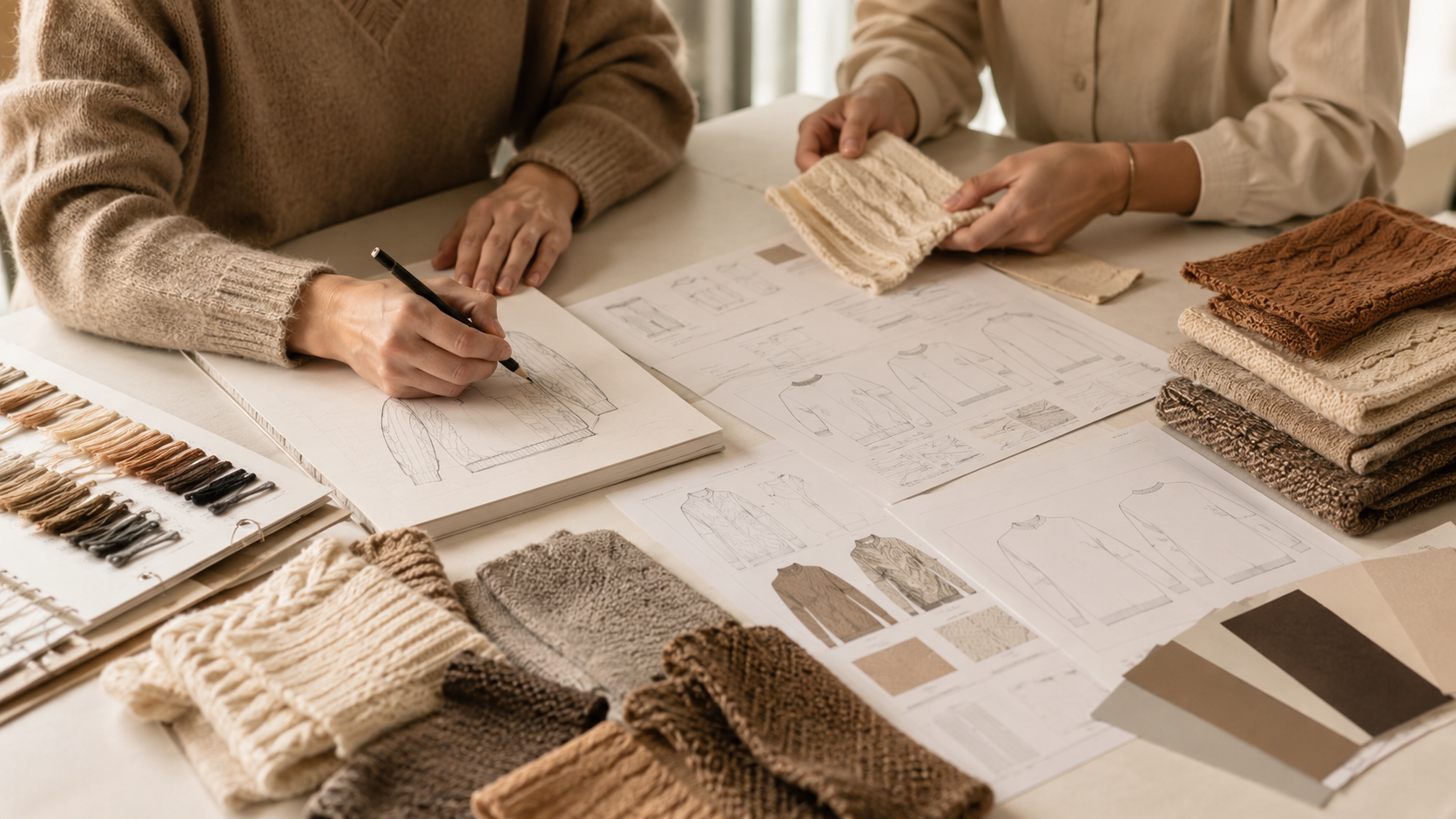
A detailed tech pack is one of the most helpful starting points for private label knitwear production. It usually includes flat sketches, measurements, construction notes, yarn preferences, color references, stitch information, label placement and packaging requirements.
For startup brands or smaller collections, a full tech pack may not always be available. In those cases, a manufacturer can often work from reference samples, mood boards, competitor products or clear photo references, as long as the expected fit, hand feel, quality level and target price are discussed openly.
The goal of the first stage is alignment. Before sampling starts, both the brand and the factory should understand the intended product category, style direction, MOQ, yarn expectation, sample timing and bulk delivery plan.
Step two: yarn, gauge and construction selection
Once the concept is clear, yarn selection becomes a critical decision. Cotton, wool blends, acrylic blends, viscose, cashmere blends, recycled yarns and other options can all create very different results. The same silhouette can feel casual, premium, lightweight or warm depending on the yarn.
Gauge and knitting technique should also be reviewed at this stage. A finer gauge may deliver a smoother and more refined look, while a lower gauge can create heavier, chunkier sweaters. Techniques such as cable knit, rib, jacquard, intarsia or crochet influence both aesthetics and production complexity.
- Yarn selection: Determines hand feel, texture, warmth, drape and final product positioning.
- Gauge choice: Affects thickness, weight, structure and production feasibility.
- Stitch technique: Impacts visual design, sampling difficulty, machine time and cost.
- MOQ planning: Helps brands balance customization goals with realistic production requirements.
Step three: sample development
Sampling is where the collection begins to take physical shape. The first sample may focus on structure, overall look and feasibility. In many cases, revisions are necessary. The fit may need adjustment, the yarn may need to be changed, or the stitch density may need refinement.
This stage is especially important in knitwear because small changes can strongly affect the final garment. Collar depth, sleeve width, body length, rib tension, washing effect and yarn softness should all be reviewed before bulk production starts.
Step four: private label details
Private label manufacturing is not only about the garment itself. Brand identity is often expressed through neck labels, care labels, woven labels, hangtags, packaging, polybags and carton markings. These details help turn a factory-made product into a recognizably branded item.
Before bulk production, the manufacturer should confirm artwork requirements, label sizes, placement, packaging standards, barcode information and shipping marks. Clear approval at this stage reduces mistakes during packing and delivery.
A clear workflow from idea to delivery
Design Review
Review tech packs, reference photos, sketches, original samples or product concepts.
Yarn & Gauge Development
Select suitable yarn, gauge, stitch structure, hand feel and production method.
Sampling & Revision
Develop samples, review fitting, adjust construction details and confirm final direction.
Private Label Setup
Confirm neck labels, care labels, hangtags, packaging, polybags and carton requirements.
Bulk Production & QC
Manage knitting, linking, washing, finishing, inspection and production consistency.
Packing & Export Delivery
Complete folding, labeling, polybag packing, carton packing and export-ready delivery.
Step five: pre-production confirmation
Before bulk knitting begins, final approvals should be in place. This usually includes the confirmed sample, size specifications, approved colors, packaging details and order quantities by size or style.
For repeat orders or multi-style programs, a structured approval process is even more important. It helps maintain consistency across categories and gives the brand more confidence in delivery planning.
Step six: bulk production and quality control
During bulk production, the focus shifts to consistency. Knitwear must maintain accurate measurements, stable construction, acceptable color variation and clean finishing. Factories typically control this through in-line checks, measurement verification, finishing inspections and packing review.
Quality control in knitwear often includes checking stitch appearance, shape stability, labeling accuracy, workmanship and packaging completeness. For delicate or premium yarns, extra attention may be needed during washing, steaming and finishing.
Step seven: packing and shipping
Once production passes inspection, the order moves into folding, labeling, polybagging, carton packing and shipment coordination. This stage may seem straightforward, but it influences how the brand receives the final goods and how smoothly distribution can begin.
Clear carton marks, correct quantity breakdowns and organized packaging standards all support a more professional delivery result.
Building a better long-term partnership
The best private label manufacturing relationships are not purely transactional. They are collaborative. Brands that communicate clearly and manufacturers that guide realistically can build stronger collections over time.
At CZ Knitwear, we support private label programs through sampling, yarn recommendations, development based on tech packs or photos, custom labeling and structured production follow-up. For growing brands, a reliable knitwear partner can make the difference between a product idea and a scalable collection.