
WholeGarment vs. Traditional Knitting: Choosing the Right Tech

Welcome to CZ Knitwear.

Featured Image

In the high-stakes world of premium knitwear, the technological approach to construction can define everything from retail price points to wearer comfort.

At Dongguan Chunzhen Clothing, we utilize both Shima Seiki WholeGarment technology and traditional cut-and-sew methods. Understanding which one fits your brand’s vision is essential for optimizing your production ROI.

What is WholeGarment Technology?

WholeGarment, pioneered by Shima Seiki, allows for the production of a complete garment in one single piece, directly from the knitting machine. This eliminates the need for post-knitting assembly (linking and sewing), resulting in a “seamless” finish that offers unparalleled comfort and a superior drape.

  • Zero Seams: Eliminates bulk and potential irritation points, ideal for base layers and lightweight sweaters.
  • Material Efficiency: Since there is no cutting involved, material waste is reduced to near zero.
  • Design Freedom: Complex three-dimensional silhouettes that are impossible with traditional linking can be achieved easily.

Traditional Cut-and-Sew / Linking

While WholeGarment is revolutionary, traditional methods still hold a significant place in the industry, especially for specific aesthetics and cost-sensitive high-volume orders.

  • Cost Effective for Volume: In large-scale production, traditional linking can often be more cost-efficient for simpler designs.
  • Structural Integrity: Seams can provide necessary structure for heavier gauge cardigans or coats.
  • Mixed Media: Better suited for garments that combine different fabrics or complex patchworks.

Conclusion

For brands targeting the ultra-luxury, “second-skin” comfort segment, WholeGarment is the gold standard. For those focusing on structural fashion and scalable volume, traditional precision linking remains a reliable and high-quality choice.

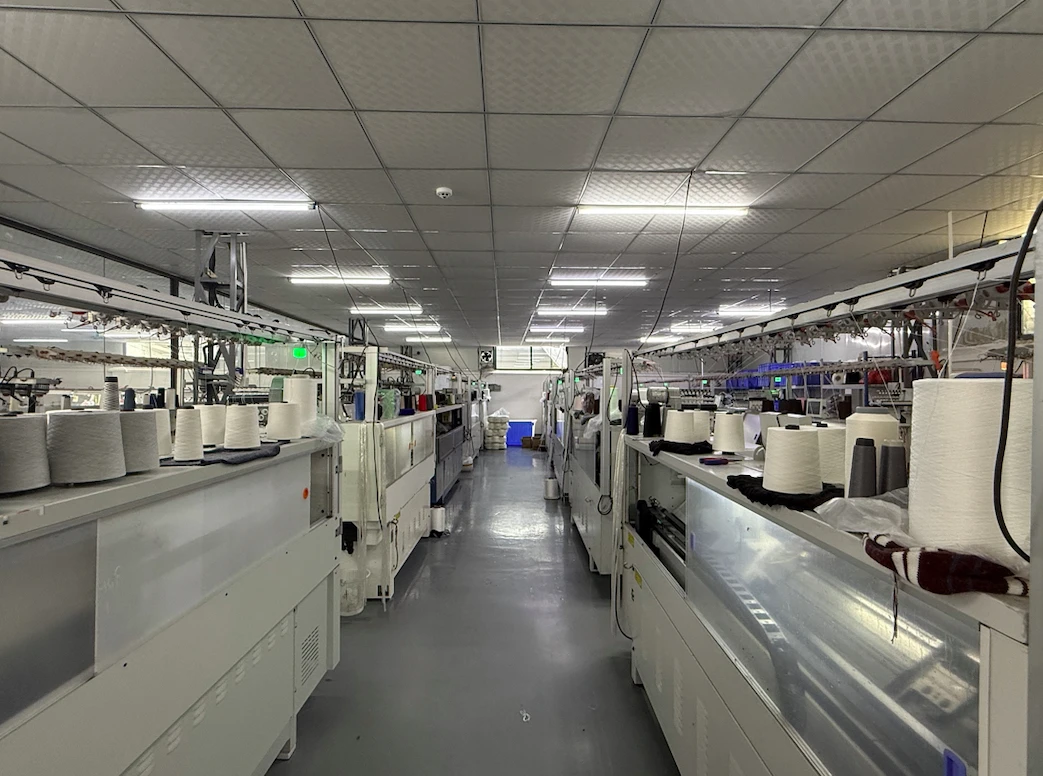
WholeGarment Shima Seiki Seamless Technology
OEM Workflow

Navigating the journey from a designer’s initial concept to a production-ready gold seal sample is the foundation of a successful knitwear partnership.

At CZ Knitwear, we have refined our OEM/ODM workflow over 20 years to ensure that your vision is translated into reality with technical precision. Here is how we bridge the gap between design and manufacturing.

Stage 1: Technical Interpretation

Every project begins with your tech pack or initial sketches. Our technical team analyzes the stitch patterns, yarn composition, and garment measurements to identify the best machine gauge (from 3G to 22G) for your design.

  • Yarn Sourcing: We source premium natural and synthetic fibers to match your quality and price requirements.
  • CAD Programming: Our programmers translate the design into instructions for our Stoll and Shima Seiki computerized knitting machines.

Stage 2: Prototyping and Refinement

The first physical sample (proto sample) allows us to evaluate the hand-feel, fit, and drape. We provide detailed feedback on how the chosen yarn behaves with the intended stitch structure.

  • Fitting Sessions: Reviewing the sample on a fit model to ensure the silhouette meets your brand’s standards.
  • Revision Cycles: Quick adjustments to CAD programs or yarn tension based on your feedback.

Stage 3: The Gold Seal Sample

Once all revisions are approved, we produce the “Gold Seal” or “Pre-Production” (PP) sample. This serves as the master reference for the entire mass production run, ensuring consistency in every unit produced.

Conclusion

Mastering the OEM workflow is about communication and technical expertise. By partnering with a factory that understands the nuance of knitwear engineering, brands can significantly reduce lead times and improve product quality.

OEM Production Supply Chain Design to Reality
Follow Factory
Manufacturing May 15, 2026

Sustainable Fiber Trends in 2026 Knitwear Production

By CZ Editorial Team
Featured Image

In an era where fashion brands are increasingly scrutinized for their environmental impact, the choice of fiber in knitwear production has become a strategic decision that balances luxury aesthetics with ecological responsibility.

At Dongguan Chunzhen Clothing, we have seen a significant shift in the technical requirements coming from global fashion houses. Brands are no longer just looking for the softest hand-feel; they are demanding traceability and sustainability from the very start of the yarn sourcing process.

The Rise of Recycled Cashmere

One of the most exciting developments in the Dongguan manufacturing hub is the widespread adoption of recycled cashmere. By utilizing high-quality post-consumer waste, we can produce sweaters that maintain 95% of the performance characteristics of virgin cashmere while significantly reducing the carbon footprint of each garment.

  • Lower environmental impact during sorting and spinning.
  • Excellent thermal regulation properties.
  • Aligns with the circular economy goals of premium European labels.

However, working with sustainable fibers requires specific technical adjustments on the knitting machines. For instance, the tensile strength of certain organic blends necessitates fine-tuning our Stoll and Shima Seiki units to prevent breakage during the 14G or 18G production runs.

Conclusion

Choosing the right strategic manufacturing partner is crucial for brands looking to pivot towards sustainable collections without compromising on the “Luxury Industrial” aesthetic that high-end consumers expect.

Sustainability Cashmere Dongguan Factory
Follow Factory

Bring Your Sustainable Vision to Life

Discuss your upcoming collection with our technical production experts and get a sample project started.

WhatsApp: +86 13266179935