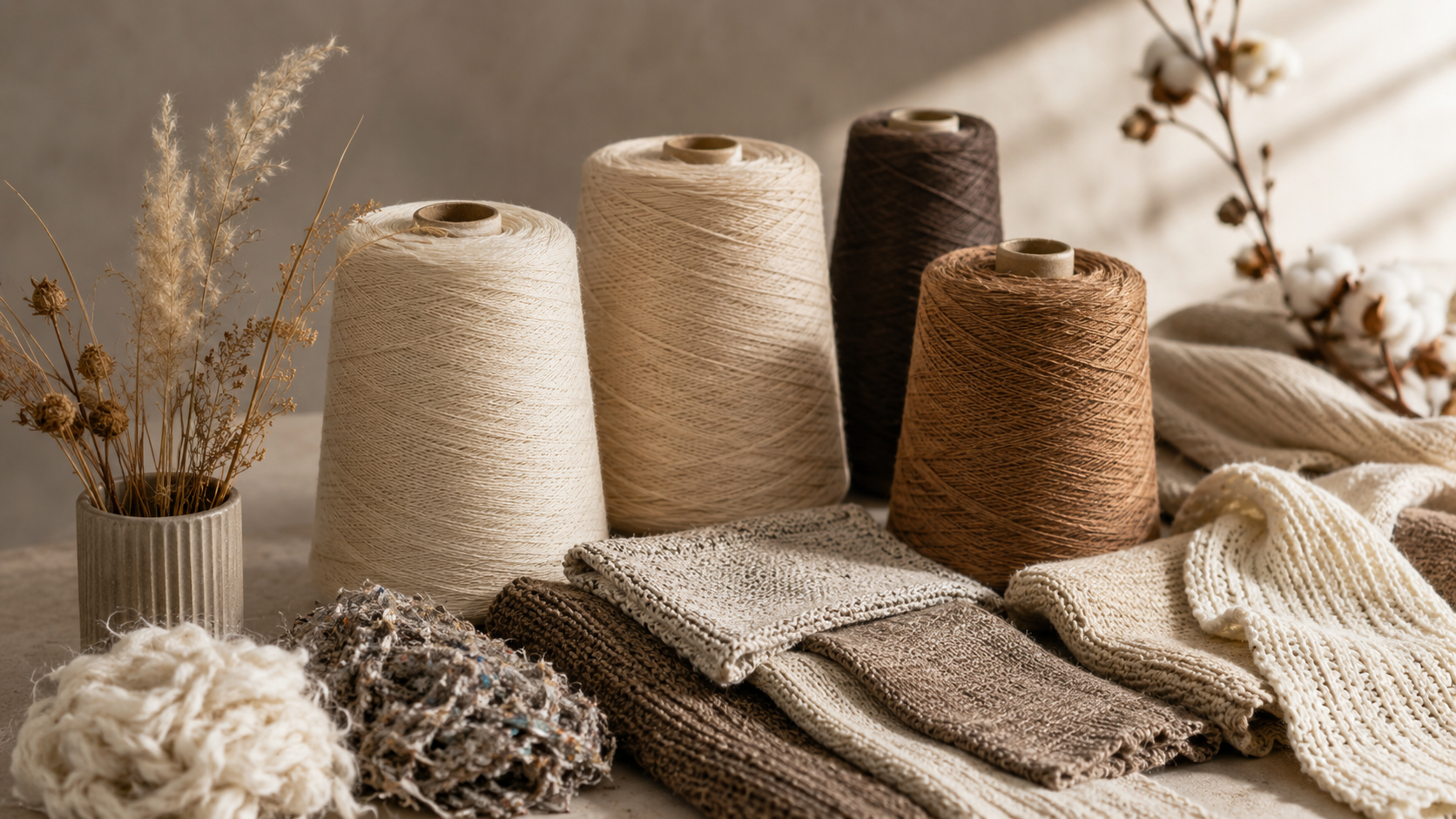
The knitwear industry is entering a new phase of sustainability. In 2026, recycled yarns are no longer treated as niche options used only in environmentally themed capsule drops. They are becoming a practical and commercially relevant choice for fashion brands that want better material stories, more responsible sourcing, and stronger long-term differentiation. For knitwear collections in particular, this shift matters because yarn is the starting point of almost every design, from hand feel and drape to warmth, durability, texture and final price.
At the same time, buyers are asking more detailed questions. They want to know what percentage of recycled content a yarn contains, how it affects softness and pilling, whether it works for flat knits or cable textures, and how it fits into a broader circular product strategy. This means manufacturers need to think beyond the simple label of “eco-friendly” and focus on performance, traceability and design suitability.
Why recycled yarns are gaining momentum
Several market forces are driving adoption. First, brands are under growing pressure to reduce waste and demonstrate more thoughtful material choices. Second, mills and yarn suppliers have improved their offerings. Recycled cotton, recycled polyester, recycled nylon and blended constructions now come in more commercially useful counts, shades and surface finishes. Third, consumers are becoming more educated about fibers, which means materials can support marketing as well as product development.
For knitwear brands, recycled yarns create an opportunity to combine function and story. A sweater made with recycled cotton may communicate a lower-impact message while still delivering softness and a casual, everyday appeal. A recycled polyester blend may improve resilience and shape retention in lightweight knits. Recycled nylon can support performance-driven styles, while recycled wool blends may contribute warmth and texture for autumn and winter programs.
Circularity is bigger than fiber content
Using recycled yarn is only one step. Circular knitwear manufacturing also includes thoughtful pattern development, efficient material usage, and products designed for longer wear. A circular approach asks how the garment is made, how much waste is produced during development and bulk production, how long the item will remain wearable, and whether the material mix supports future recycling or reuse.
For manufacturers, this means working closely with brands at the development stage. Yarn recommendations should consider the target market, expected retail positioning and product lifespan. A high-volume private label cardigan may require a balance between cost, softness and consistency, while a more premium capsule may prioritize natural blends, tactile richness and lower environmental impact.
Common recycled yarn options in knitwear
The most widely used recycled yarn families each have different strengths. Recycled cotton is often chosen for breathable sweaters, transitional layers and casual silhouettes. It can create a slightly drier, natural hand feel and works well in many classic gauges. Recycled polyester is often used where durability, resilience and easier care are important. Recycled nylon is common in supportive blends, especially when stretch recovery or abrasion resistance matters. Recycled wool blends can add warmth and a richer visual depth, especially in brushed, boucle or textured constructions.
No single recycled yarn is ideal for every program. That is why sampling remains essential. The same fiber content may behave differently depending on yarn spinning, blend composition, gauge selection and stitch structure.
What brands should ask before developing
When evaluating recycled yarns, brands should request clear information from the manufacturer or supplier. This includes the material composition, recycled content percentage, intended use, available color range, minimum order quantity and possible lead-time differences compared with conventional yarns. It is also useful to understand how the yarn behaves in washing tests, whether the color has any limitations, and whether the final look supports the intended brand image.
Knitwear is highly tactile. A material may look suitable on paper but feel too dry, too heavy or too fuzzy once knitted. That is why development based on knitted swatches, trial samples and wear testing is so important. The goal is not simply to use a recycled fiber, but to create a garment that customers will actually want to wear repeatedly.
Manufacturing considerations for circular collections
For a factory, successful circular knitwear development depends on process control. Yarn substitution can affect machine settings, stitch consistency, shrinkage and finishing. Swatches should be reviewed for shape stability, pilling and visual texture. Quality control teams need clear standards for each program, especially when recycled materials have slight natural variation.
Brands should also think about assortment planning. A circular strategy can work well when sustainable yarn stories are integrated across several silhouettes rather than isolated in one hero style. This helps reinforce the collection story and gives consumers a clearer reason to engage with the brand.
A practical path forward
The most effective sustainable knitwear programs are not built around buzzwords. They are built around practical choices that align brand values, customer expectations and product performance. Recycled yarns can absolutely support that goal, but success depends on choosing the right yarn for the right silhouette and working with a manufacturer who understands both development and execution.
At CZ Knitwear, we work with brands to evaluate yarn direction, review sample feasibility, and support product development based on design intent, target market and MOQ needs. For brands exploring circular knitwear in 2026, the opportunity is clear: thoughtful yarn choices can help create collections that feel relevant, responsible and commercially realistic.
Bring Your Knitwear Vision to Life
Looking for a reliable OEM/ODM knitwear manufacturer? Contact CZ Knitwear at cz@chunzhenclothing.com or WhatsApp +8613266179935.
Request Technical Consultation