
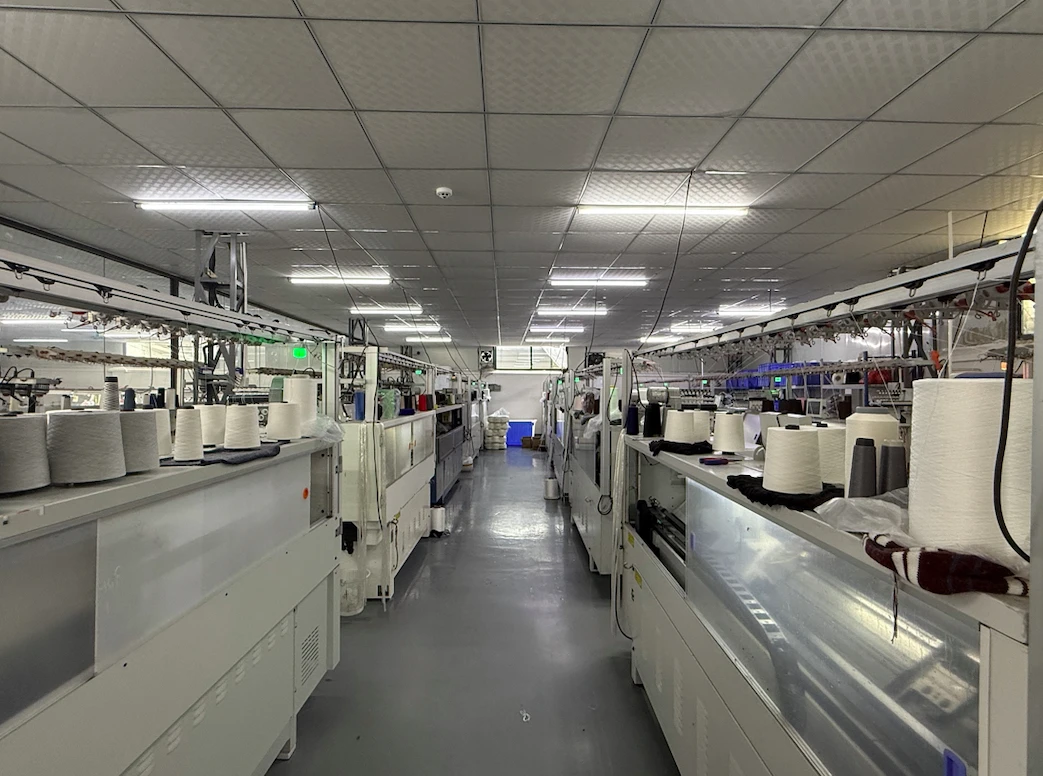
In an era where fashion brands are increasingly scrutinized for their environmental impact, the choice of fiber in knitwear production has become a strategic decision that balances product aesthetics, comfort, performance and responsible sourcing.
At Dongguan Chunzhen Clothing Co., Ltd., we have seen a clear shift in the technical requirements coming from global fashion brands, private labels and sourcing teams. Buyers are no longer only looking for a soft hand feel or attractive surface texture. They are also asking how yarn composition, traceability, washing performance, pilling resistance and long-term wearability can support a more responsible knitwear collection.
For sweater manufacturing, fiber selection is one of the first decisions that affects the final product. Yarn influences drape, thickness, warmth, elasticity, color expression, production efficiency and final cost. This is why sustainable fiber development should not be treated as a simple marketing label. It needs to be reviewed together with gauge, stitch structure, garment silhouette and target price range.
Why sustainable fibers are becoming more important
Fashion brands are under growing pressure to reduce waste, improve supply chain transparency and communicate clearer material stories to consumers. In knitwear, this pressure is especially visible because sweaters, cardigans, knit tops and accessories depend heavily on yarn quality and tactile value.
Sustainable fiber options are becoming more practical for commercial collections because yarn suppliers have improved available blends, counts, colors and surface finishes. Recycled cotton, recycled polyester, recycled nylon, responsibly sourced wool blends and other lower-impact yarn options can now support a wider range of knitwear styles than before.
- Recycled cotton can support breathable casual sweaters and transitional knitwear.
- Recycled polyester blends can improve resilience and easier care for lightweight styles.
- Recycled nylon can be useful when strength, recovery or durability is required.
- Responsible wool or wool-blend yarns can support warmth, texture and autumn / winter collection value.
The rise of recycled and responsible yarn blends
One of the most relevant developments for custom knitwear production is the wider adoption of recycled and responsible yarn blends. For brands, these yarns can help build a stronger sustainability story while still maintaining the softness, structure and visual quality needed for commercial sweater programs.
However, sustainable yarns need to be tested carefully. Different recycled or blended fibers may behave differently during knitting, washing and finishing. A yarn that looks suitable on paper may feel too dry, too heavy, too fuzzy or too unstable after knitting. This is why swatches and samples remain essential before bulk production.
For OEM / ODM knitwear projects, we recommend reviewing fiber content, yarn count, gauge, stitch structure, hand feel, shrinkage, pilling and target MOQ together before confirming the final development direction.
Technical considerations during production
Working with sustainable fibers often requires practical adjustments during development and production. Yarn tension, stitch density, machine setting, washing method and finishing process may all affect the final garment. For fine-gauge styles, yarn stability is especially important because breakage or uneven tension can influence production efficiency and appearance.
For chunky sweaters, cable textures or brushed surfaces, the factory needs to check whether the selected yarn can support the intended look without excessive pilling, deformation or inconsistent texture. For lightweight knit tops or fitted silhouettes, stretch recovery, drape and dimensional stability become more important.
How brands should evaluate sustainable knitwear materials
Before confirming a sustainable yarn direction, brands should ask for clear information about fiber composition, recycled content percentage, yarn availability, color options, MOQ, lead time and testing requirements. It is also useful to compare how the same design performs in different yarn options before finalizing the collection.
A strong development process helps avoid problems later in bulk production. When brands provide a tech pack, reference photo, target price range, preferred hand feel and quantity plan, the manufacturer can give more practical suggestions on yarn selection, gauge and workmanship.
Conclusion
Sustainable fiber development is becoming an important part of modern knitwear manufacturing, but it should always be connected to real product performance. The most successful collections are not built only around buzzwords. They are built around thoughtful material choices, reliable sampling, clear quality standards and production feasibility.
Choosing the right knitwear manufacturing partner can help brands develop sustainable sweater collections that are commercially realistic, technically stable and aligned with their brand positioning. At CZ Knitwear, our team supports yarn review, gauge development, sample making and bulk production for custom OEM / ODM knitwear programs.