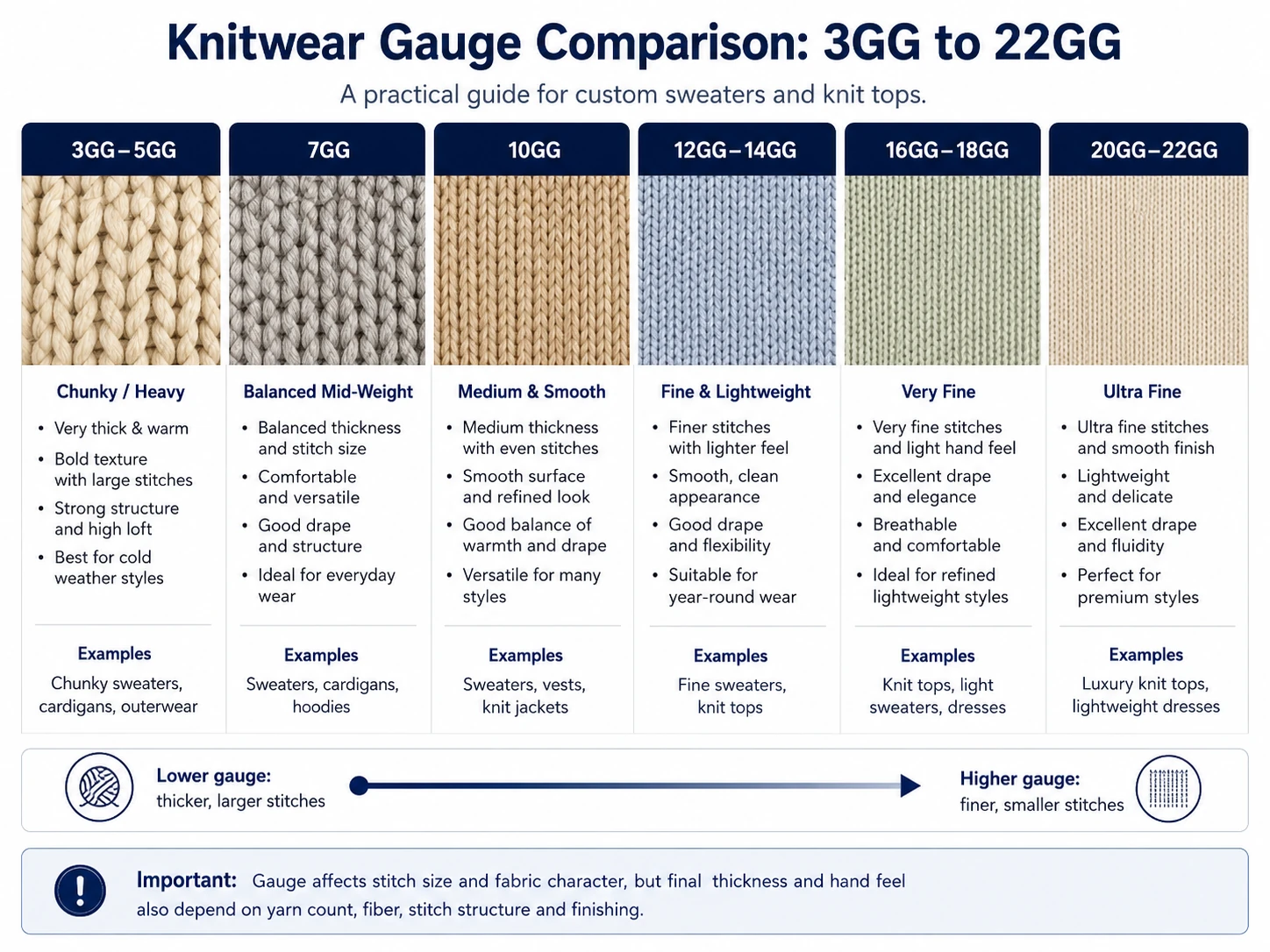
In flat knitting, gauge generally describes needle density on the machine needle bed. Lower gauges such as 3GG and 5GG usually create larger stitch scales and support coarser knit directions, while higher gauges such as 12GG, 14GG and above generally create finer stitches. However, gauge alone does not determine finished thickness, weight or hand feel. Yarn count, yarn plies, stitch structure, density, finishing and garment measurements must be evaluated together.
When developing a custom sweater, cardigan, knit dress, polo or lightweight knit top, choosing the right gauge is not simply choosing a number.
Gauge influences the visual scale of the stitches, the yarns that can be used, how knitted structures appear and how the fabric behaves. For that reason, the more useful development question is not “Which gauge is best?” but “Which combination of gauge, yarn and stitch structure will create the product we want?”
If the technical combination has not yet been confirmed, an OEM / ODM knitwear development team can evaluate the design direction, yarn, stitch structure and gauge through swatching and sampling before bulk production.
1. What Does Gauge Mean in Knitwear?
On computerized flat-knitting machines, gauge generally refers to the number of needles arranged within one inch of the needle bed.
In practical product development:
- A lower gauge number means wider needle spacing and generally supports larger stitches and coarser yarn directions.
- A higher gauge number means finer needle spacing and generally produces smaller, more refined stitches.
This is why 3GG or 5GG knitwear is often associated with chunky sweaters and visible texture, while 12GG, 14GG and higher gauges are commonly considered for fine sweaters, polos and lightweight knit tops.
2. Quick Comparison: 3GG to 22GG
The following ranges are useful starting references for buyers. They should not be treated as fixed rules.
| Gauge | Typical Visual Direction | Common Development Uses | Buyer Considerations |
|---|---|---|---|
| 3GG–5GG | Large stitches, strong texture and substantial visual character. | Chunky sweaters, textured cardigans, cables and heavier knitwear. | Review yarn bulk, total weight, drape, stitch definition and finished measurements. |
| 7GG | Medium stitch scale with a balance of structure and texture. | Sweaters, cardigans, half-zips and textured fashion knitwear. | Confirm whether the target should feel compact, soft, structured or fluid. |
| 10GG | Intermediate appearance between medium and fine gauge. | Sweaters, vests, knit jackets and transitional styles. | Useful when the product requires cleaner surface definition without becoming extremely fine. |
| 12GG–14GG | Smaller stitches with a cleaner and more refined surface. | Fine sweaters, polos, knit tops, cardigans and dresses. | Review opacity, stretch, recovery, drape and appearance after finishing. |
| 16GG–18GG | Very fine stitch definition and lightweight visual direction. | Refined knit tops, lightweight sweaters and layering pieces. | Yarn count and consistency become increasingly important. |
| 20GG–22GG | Ultra-fine stitch scale and smooth surface direction. | Very fine knitwear and lightweight premium styles. | Confirm yarn suitability, coverage, stability and production feasibility through sampling. |
3. How Common Knitwear Gauge Ranges Are Used
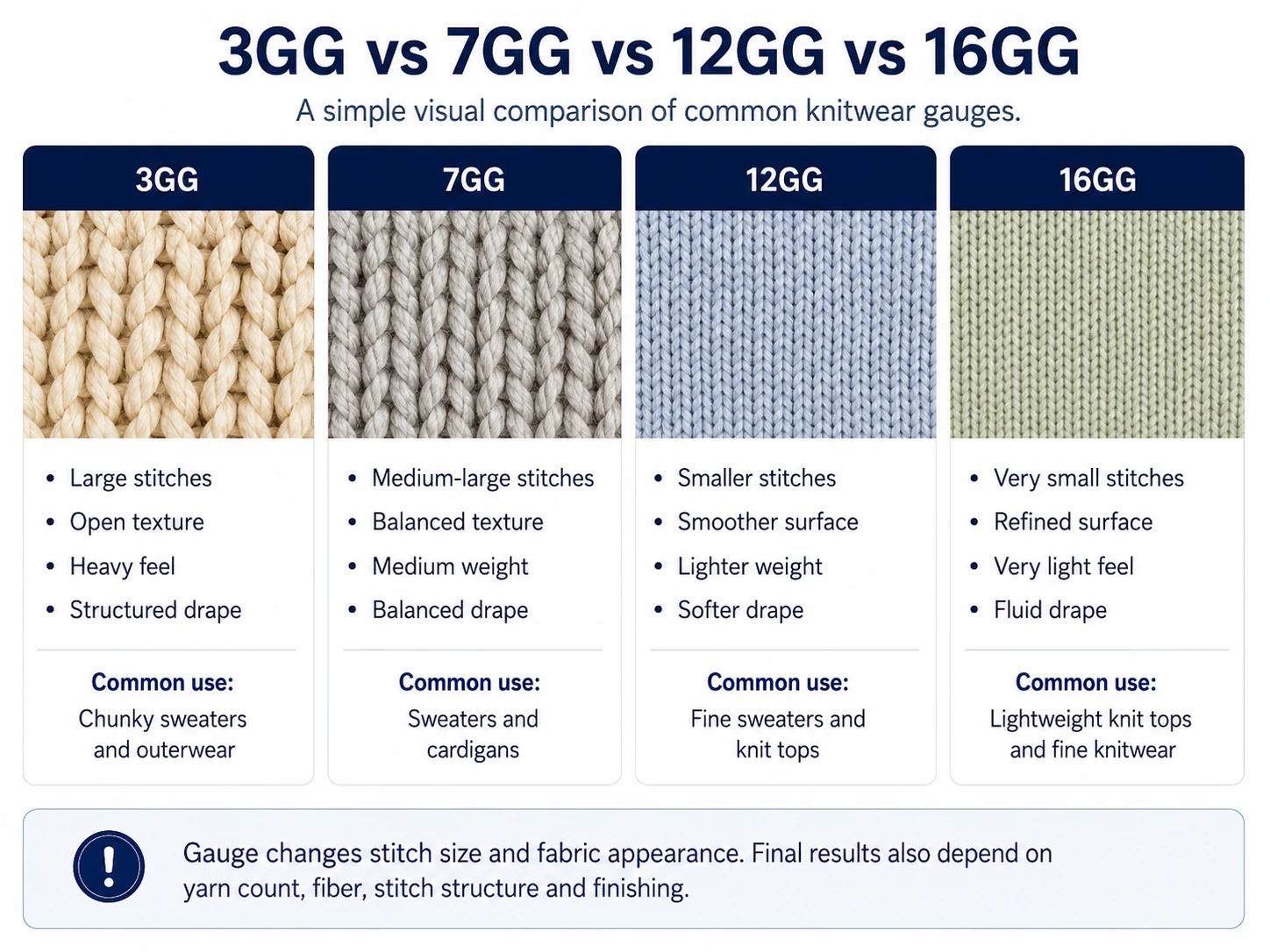
3GG–5GG: Chunky Texture and Strong Structure
Lower gauges such as 3GG and 5GG are commonly considered when a design requires visible stitches, pronounced texture or a substantial knitted appearance.
They can work particularly well for chunky pullovers, winter cardigans, oversized silhouettes, cables, ribs and other structures where the knitted surface is a major part of the design.
However, buyers should not select 3GG or 5GG only because they want a “winter sweater.” Yarn thickness, number of yarn ends, fiber composition and the stitch structure can all change the final weight and hand feel.
7GG: A Flexible Mid-Gauge Direction
7GG is commonly used for sweaters and cardigans that need visible knit character without becoming as coarse as many 3GG constructions.
Depending on the yarn and structure, it can support classic sweaters, cardigans, half-zips, ribs, cable designs and transitional-season programs.
A smooth 7GG cardigan and a highly textured 7GG cable sweater can look and behave very differently. The gauge is only one part of the specification.
10GG: Between Medium and Fine Gauge
10GG can be useful when a design needs a cleaner surface than a coarse knit but still requires more visible stitch character than many fine-gauge constructions.
Potential applications include lightweight sweaters, vests, knit jackets and refined transitional knitwear.
12GG–14GG: Fine Sweaters and Knit Tops
12GG and 14GG are commonly used when brands want smaller stitches and a cleaner, more refined surface.
Common applications include fine-gauge sweaters, short-sleeve knit tops, polos, fitted cardigans, knit dresses and layering pieces.
Buyers should still evaluate the selected yarn and construction carefully. A compact cotton, viscose blend, wool blend and specialty yarn will not create the same result simply because each product is knitted at 12GG.
16GG–22GG: Very Fine Knitwear Development
Fine and ultra-fine gauges can support smaller stitches and lightweight, smooth or refined knitwear directions.
Depending on the design and yarn, these gauges may be considered for lightweight knit tops, fine sweaters, premium layering pieces, fitted styles and other very fine knitwear.
The objective should not simply be to use the highest gauge available. Buyers should first define the required opacity, weight, softness, drape, stretch, surface appearance and seasonal use.
4. Does Higher Gauge Always Mean Thinner Knitwear?
Higher gauge generally means finer needle spacing and smaller stitches, but it does not independently determine finished garment thickness or weight. Yarn count, yarn plies, fiber, stitch structure, knitting density and finishing can all change the result.
This is one of the most important distinctions for sourcing teams to understand.
Yarn Count & Plies
Fine yarn, bulky yarn, single yarn and multiple yarn ends create different volume, coverage and weight.
Fiber Composition
Cotton, wool, merino, viscose, acrylic and blended yarns differ in bulk, elasticity, softness and surface behavior.
Stitch Structure
Jersey, rib, cable, jacquard, intarsia, pointelle and openwork structures use yarn and space differently.
Knitting Density
Loop length and density influence fabric openness, dimensions, weight and visual compactness.
Garment Measurements
An oversized sweater and fitted sweater may use the same gauge but have very different total garment weight and drape.
Finishing
Washing, steaming, brushing, pressing and other finishing processes can change measurements, softness and surface appearance.
5. How Gauge Interacts With Yarn and Stitch Structure
Gauge and yarn selection should be developed together rather than treated as separate technical decisions.
If the yarn is too heavy for the intended gauge and construction, the fabric may become overly compact or difficult to execute as intended. If the yarn is too fine, the product may lack the coverage, weight or surface character the buyer expects.
Before sampling, it is useful to describe the intended result in practical language, for example:
- lightweight with fluid drape
- soft and compact
- dry cotton hand feel
- chunky with visible cable texture
- fine and smooth for layering
- structured but not heavy
- lightweight but not transparent
A Better Way to Brief the Manufacturer
Instead of specifying only “12GG sweater,” give the manufacturer the complete development target.
- Product: fitted short-sleeve knit polo
- Season: spring / summer
- Hand feel: smooth, soft and compact
- Appearance: fine stitch definition with suitable opacity
- Fit: close to body with controlled recovery
- Reference: sample, swatch or target garment weight when available
This gives the factory a complete product target rather than forcing the gauge number to describe characteristics it cannot determine alone.
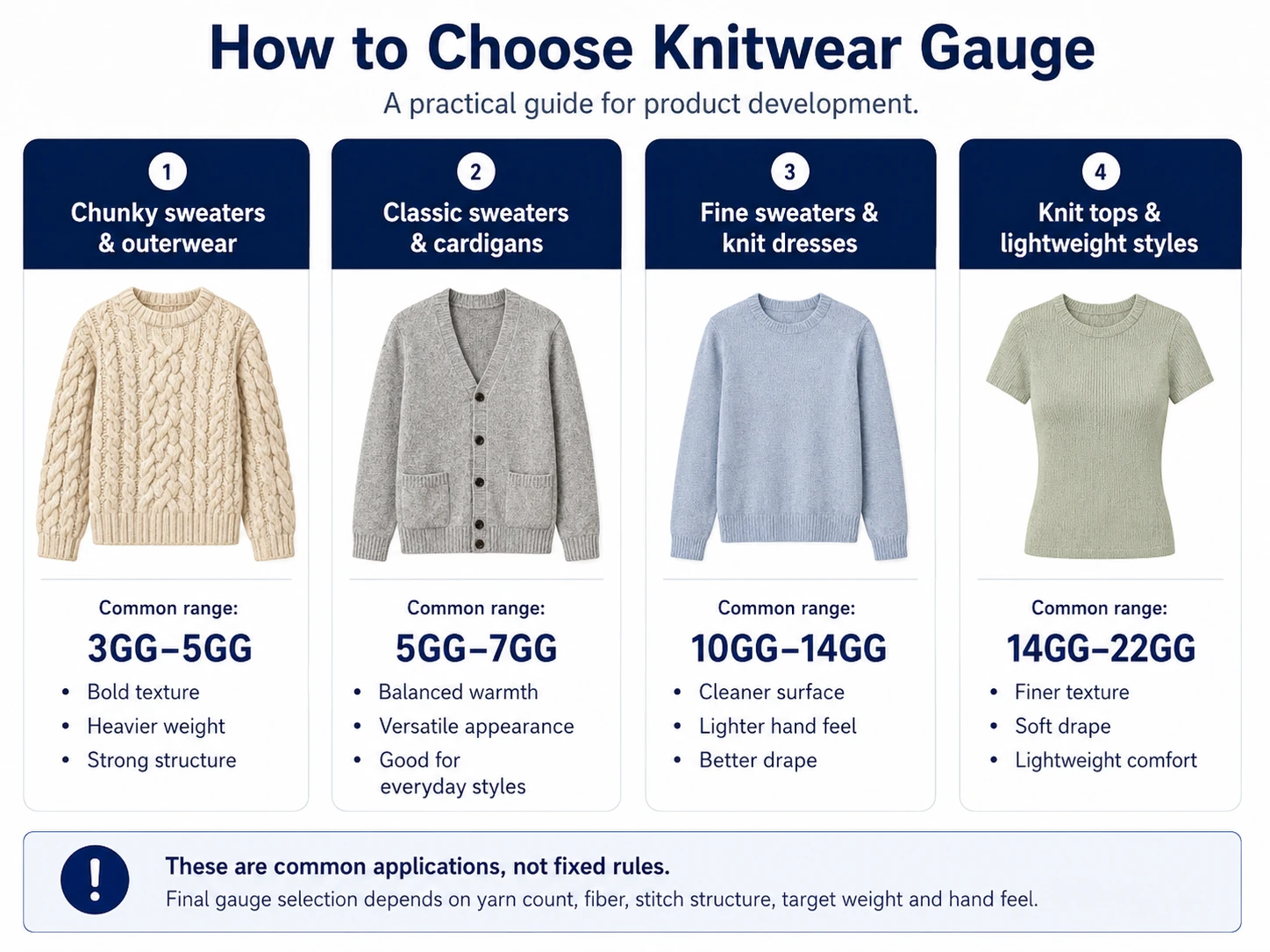
6. How to Choose Knitwear Gauge by Product Type
Product type can help narrow the initial development direction, but it should never become a fixed gauge rule.
| Product Direction | Common Starting Point | What the Buyer Should Confirm |
|---|---|---|
| Chunky cable or oversized winter sweater | Often 3GG–5GG | Yarn bulk, cable definition, garment weight, drape and finished measurements. |
| Classic sweater or cardigan | Often 5GG–7GG | Texture, warmth, recovery, structure and intended season. |
| Refined sweater or transitional knitwear | Often 10GG–14GG | Surface appearance, weight, hand feel, drape and layering function. |
| Fine sweater, knit polo or fitted top | Often 12GG–18GG | Yarn count, opacity, stretch, recovery and finishing. |
| Very fine lightweight knitwear | May use 16GG–22GG | Coverage, yarn suitability, stitch stability, softness and production feasibility. |
Buyers developing sweaters can review our custom sweaters, cardigans and knit dresses range.
For lighter product directions, explore our custom knit tops, including fine-gauge and lightweight styles.
7. How Gauge Affects Costing and Production
Gauge can influence machine selection, yarn compatibility, knitting time and technical programming, but it should not be used as a standalone cost indicator.
A lower-gauge garment is not automatically cheaper, and a higher-gauge garment is not automatically more expensive.
Knitwear costing depends on the complete specification, including:
- yarn type and yarn usage
- garment weight
- stitch complexity
- knitting time
- linking and sewing
- embroidery, applique or other decoration
- trims and labels
- finishing
- packaging
- order quantity
Brands preparing a new program can use our guide to what buyers should send a knitwear manufacturer before requesting a quotation.
8. What Gauge Information Should Go Into a Tech Pack?
If the gauge has already been technically confirmed, it should be recorded clearly in the production specification.
Useful information may include:
- target or confirmed machine gauge
- yarn composition
- yarn count or supplier yarn reference
- number of yarn ends when specified
- main stitch structures
- artwork or pattern information
- target measurements
- reference sample or approved swatch
- target weight or hand-feel direction when relevant
- finishing requirements
If the design team does not know the correct gauge, do not insert an untested number simply to make the tech pack look complete.
Instead, provide the intended product appearance, yarn direction, weight, hand feel, reference images or physical sample so the manufacturer can evaluate suitable gauge and stitch options.
Review the complete knitwear Tech Pack requirements to connect gauge with measurements, yarn, stitch structure, colors, artwork, trims and production expectations.
9. How to Confirm Gauge Before Bulk Production
Gauge should be confirmed as part of the physical knitted product rather than approved as an isolated number.
Confirm the product type, season, silhouette, hand feel, weight direction, stretch and intended visual character.
Check whether the proposed yarn count, fiber, number of yarn ends and knit structure are compatible with the intended gauge.
Evaluate stitch scale, texture, opacity, drape, stretch, recovery, weight direction and overall appearance.
Check measurements and fabric behavior after the intended washing, steaming, pressing or other finishing processes.
Update the latest tech pack with the approved gauge, yarn, structure, measurements and finishing requirements.
Keep the final production specification traceable to the approved physical sample or approved sample record before bulk release.
Before releasing bulk production, use a structured knitwear sample approval checklist to review yarn, gauge, measurements, fit, workmanship, branding, finishing and packaging together.
Common Gauge Selection Mistakes
- Choosing a gauge only from a reference photo without reviewing the yarn or physical fabric.
- Assuming every garment made at the same gauge has the same thickness and weight.
- Assuming higher gauge automatically means higher quality.
- Selecting a gauge before confirming the yarn direction.
- Ignoring the effect of cable, rib, jacquard, intarsia or openwork structures.
- Changing the yarn after sampling without reviewing the resulting fabric again.
- Using the gauge number as the only basis for comparing supplier quotations.
- Releasing bulk production without updating the approved technical specification.
Developing Multi-Gauge Knitwear With CZ Knitwear
CZ Knitwear supports custom knitwear development from approximately 3GG to 22GG, covering chunky, medium and fine-gauge product directions for fashion brands, private labels and B2B sourcing teams.
Product development can include:
- yarn selection
- gauge evaluation
- stitch structures
- color development
- measurements and fit
- labels and trims
- sampling
- packaging
- bulk production
For sweater programs, review our custom sweaters, cardigans and knit dresses.
For lighter or fine-gauge directions, explore our custom knit tops.
Brands requiring broader development support can also review our custom sweater manufacturing and OEM / ODM knitwear development services.
Frequently Asked Questions About Knitwear Gauge
What does 12GG mean in knitwear?
12GG generally refers to a flat knitting machine gauge with approximately 12 needles per inch of the needle bed. Compared with lower gauges such as 3GG or 5GG, it uses finer needle spacing and is commonly used for cleaner, finer knitwear structures.
Is 3GG thicker than 12GG?
3GG generally supports larger stitches and coarser knit directions than 12GG, so it is commonly associated with chunkier knitwear. However, finished garment thickness also depends on yarn count, yarn plies, stitch structure, density and finishing.
What gauge is best for a sweater?
There is no single best sweater gauge. Chunky sweaters often use lower gauges, while lightweight or fine-gauge sweaters may use higher gauges. The correct choice depends on the design, yarn, structure, season, weight and target hand feel.
What gauge is best for knit tops?
Fine gauges are commonly used for lightweight knit tops, but knit tops can also be developed in lower gauges when a brand wants more visible texture or structure. Product type alone should not determine gauge.
Does a higher gauge mean better quality?
No. Gauge describes machine needle density and stitch scale. It is not a quality rating. Quality depends on yarn suitability, construction, workmanship, measurements, finishing and production control.
Can a manufacturer recommend the gauge if my tech pack does not specify it?
Yes. If you provide a clear design reference, yarn direction, target weight, hand feel and intended product use, the manufacturer can evaluate suitable gauge and stitch options before or during sampling.
Not Sure Which Gauge Fits Your Design?
Send your tech pack, reference image or physical sample together with the target yarn, quantity by color, size range and delivery requirements. CZ Knitwear can review the yarn, gauge, stitch structure and sampling direction before bulk production.