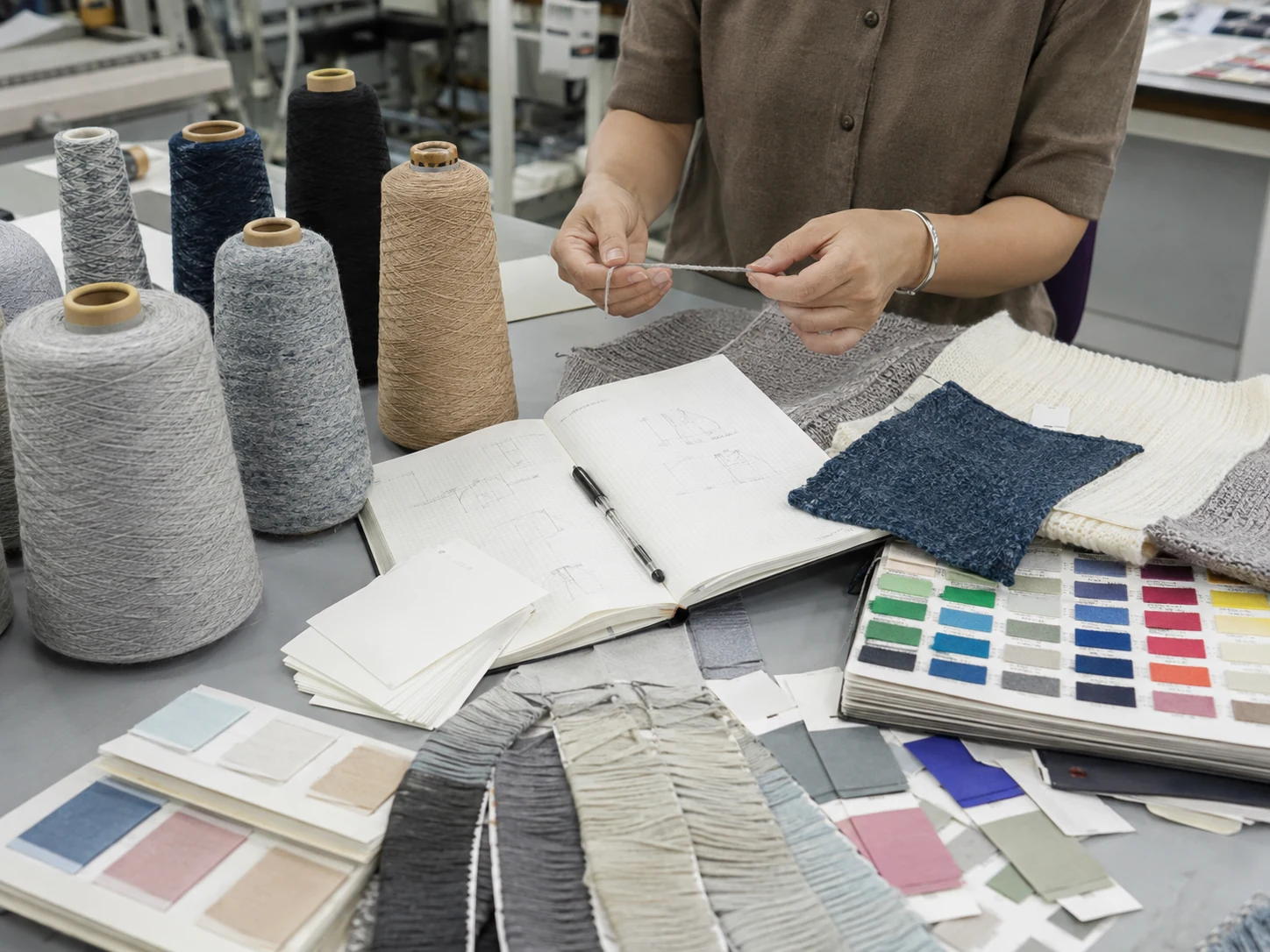
Knitwear quality is created through a sequence of technical decisions. Yarn selection affects hand feel and stability. Gauge affects structure and weight. Linking influences seam strength and appearance. Washing and finishing can change measurements. And once a sample is approved, the factory still has to reproduce that standard consistently across bulk production.
For fashion brands, the right question is therefore not simply “Can this factory make a good sweater?” It is “Can this factory control the complete knitwear manufacturing process repeatedly and at scale?”
1. A High Quality Knitwear Manufacturer Starts With Yarn Control
Knitwear begins with yarn, and material specifications should be more precise than a simple label such as “cotton,” “wool” or “cashmere blend.” Two yarns with the same nominal fiber composition can behave very differently depending on yarn count, twist, fiber quality, finishing, supplier and lot.
Before approving development, buyers should confirm that the manufacturer understands how yarn choice affects the intended garment. Important considerations include:
A yarn that looks correct on the cone may behave differently after knitting, washing and steaming. For this reason, yarn selection should be considered together with gauge, stitch structure and finishing—not as an isolated purchasing decision.
2. Check Gauge, Stitch Structure and Machine Compatibility
Gauge is one of the most important technical variables in sweater manufacturing. A chunky cable sweater, a fine-gauge fitted top and a lightweight cardigan require different combinations of yarn, machine setup, stitch density and construction.
A capable factory should be able to explain why a particular gauge is suitable for the design rather than simply agreeing with every specification supplied by the buyer.
When evaluating a supplier, ask:
- Which gauges can the factory manufacture in-house?
- Can the technical team recommend gauge based on yarn and target hand feel?
- Can the factory reproduce cable, rib, jacquard, intarsia or other structured knit techniques?
- How does the factory confirm stitch density before approving the sample?
- Will a proposed yarn work reliably on the intended machine?
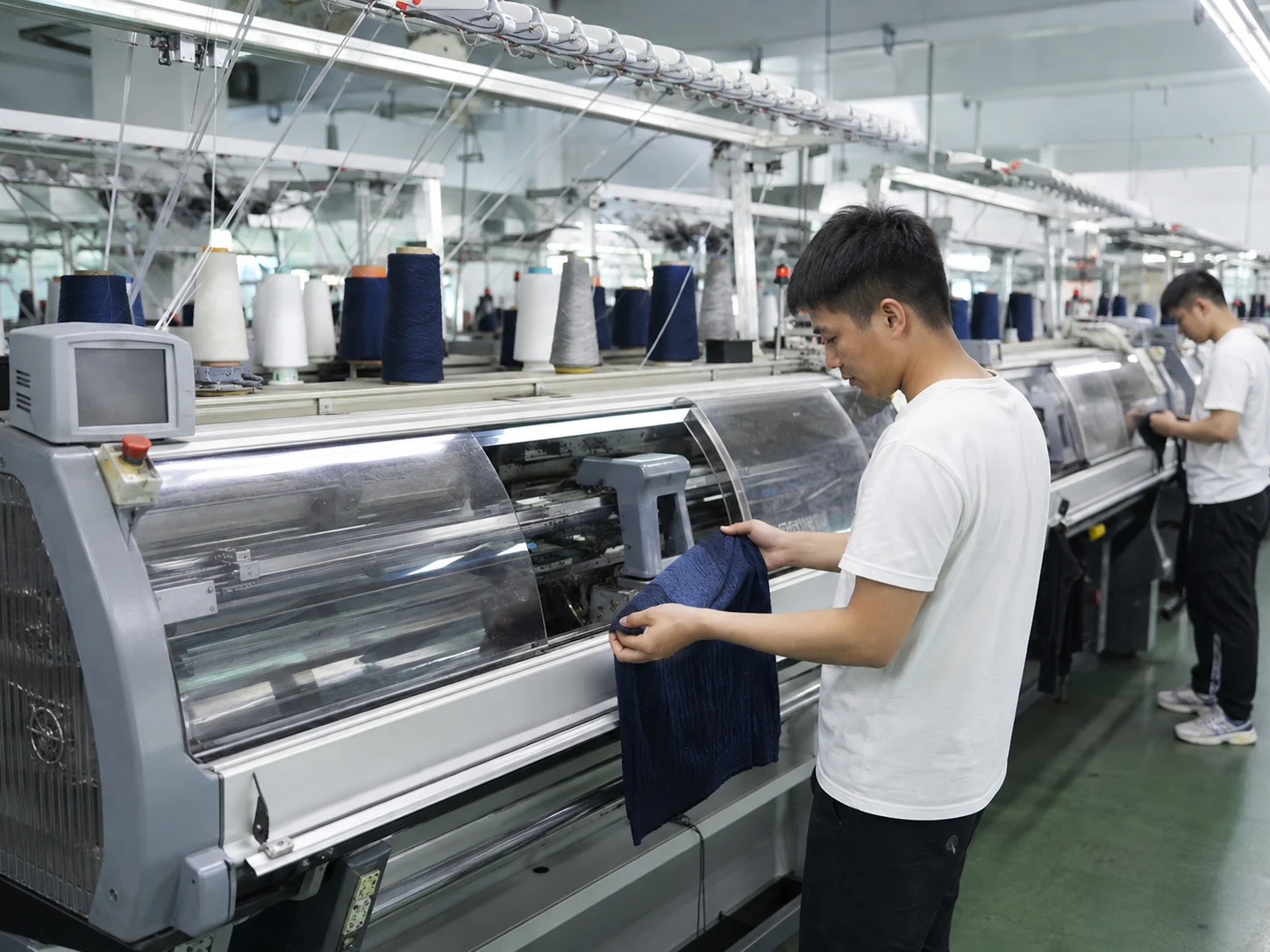
Gauge, yarn and stitch structure need to be evaluated together before stable bulk production begins.
At CZ Knitwear, development can cover multiple gauges from 3GG to 22GG, allowing the technical team to evaluate different yarn and structure combinations depending on the style.
3. Inspect Knitting Structure, Linking and Seam Construction
Good knitwear should be assessed at construction level, not only from a distance. Buyers should inspect how the knitted panels are formed, how edges are finished and how different sections of the garment are joined.
Common areas to review include:
- Uneven knitting tension
- Dropped or distorted stitches
- Inconsistent rib structures
- Loose yarn ends
- Neckline construction
- Shoulder and armhole linking
- Side seam alignment
- Pattern matching between panels
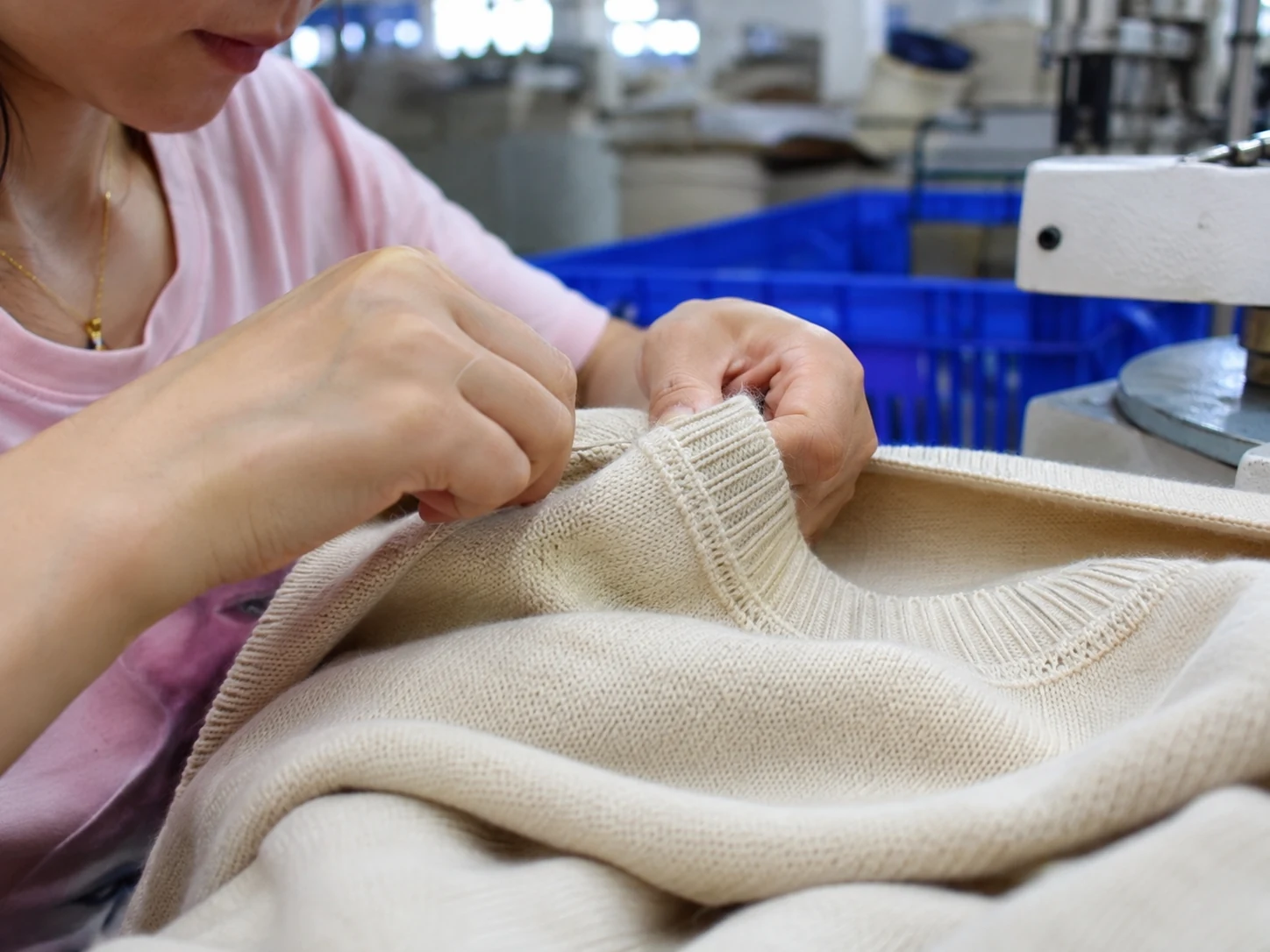
Linking and seam construction are important indicators of both appearance and garment durability.
A reliable supplier should also be able to explain how it controls linking quality around areas that experience greater stress, such as shoulders, underarms, necklines and side seams.
4. A Good Sample Is Not Enough — Check Measurement Stability
A sweater can look excellent immediately after knitting and still fail after washing, steaming or finishing. This is why sample evaluation should always include measurements against the approved specification.
Brands should review:
- Chest and body width
- Body length
- Sleeve length
- Shoulder width
- Neck opening
- Rib dimensions
- Stretch and recovery
- Post-finishing shrinkage

Measurements should be checked against the approved specification after the complete finishing process.
Measurement checks are most meaningful after the garment has completed the relevant washing, steaming or finishing process. Checking only the unfinished knitted piece may not reveal the final dimensional behavior of the garment.
Before releasing a style for production, fashion brands can also use our knitwear sample approval checklist to review measurements, workmanship, construction, labeling and finishing more systematically.
5. Ask How the Factory Controls Sample-to-Bulk Consistency
The real test of a high quality knitwear manufacturer is not whether it can produce one attractive sample. It is whether the approved standard can be reproduced consistently across a full production order.
A structured sample-to-bulk process may include:
- Approved reference sample or sealed sample
- Confirmed yarn, color and construction specification
- Production machine setup
- First-piece or pre-production verification
- Inline workmanship checks
- Measurement control during production
- Final inspection against the approved standard
This becomes increasingly important as order quantities grow. A factory that can develop a good sample but cannot control repetition, measurements or production scheduling may struggle when a brand moves from a small test order into larger seasonal programs.
6. Ask What Is Actually Checked During Knitwear QC
“Strict QC” is a common claim, but buyers should ask what the inspection actually includes. Quality control becomes meaningful only when the factory can describe specific checkpoints and acceptance standards.
| QC Area | What Buyers Should Expect |
|---|---|
| Measurements | Key points checked against approved specifications and tolerances. |
| Knitting | Inspection for dropped stitches, uneven tension, holes and visible knitting defects. |
| Linking | Neckline, shoulder, armhole and side seams checked for secure and neat construction. |
| Color | Visual review for shade variation and consistency with the approved reference. |
| Finishing | Surface appearance, loose yarn ends, steaming and final presentation reviewed. |
| Branding | Labels, hangtags, embroidery or other brand elements checked for correct placement. |
| Packing | Product, quantity, folding and packing requirements checked before shipment. |
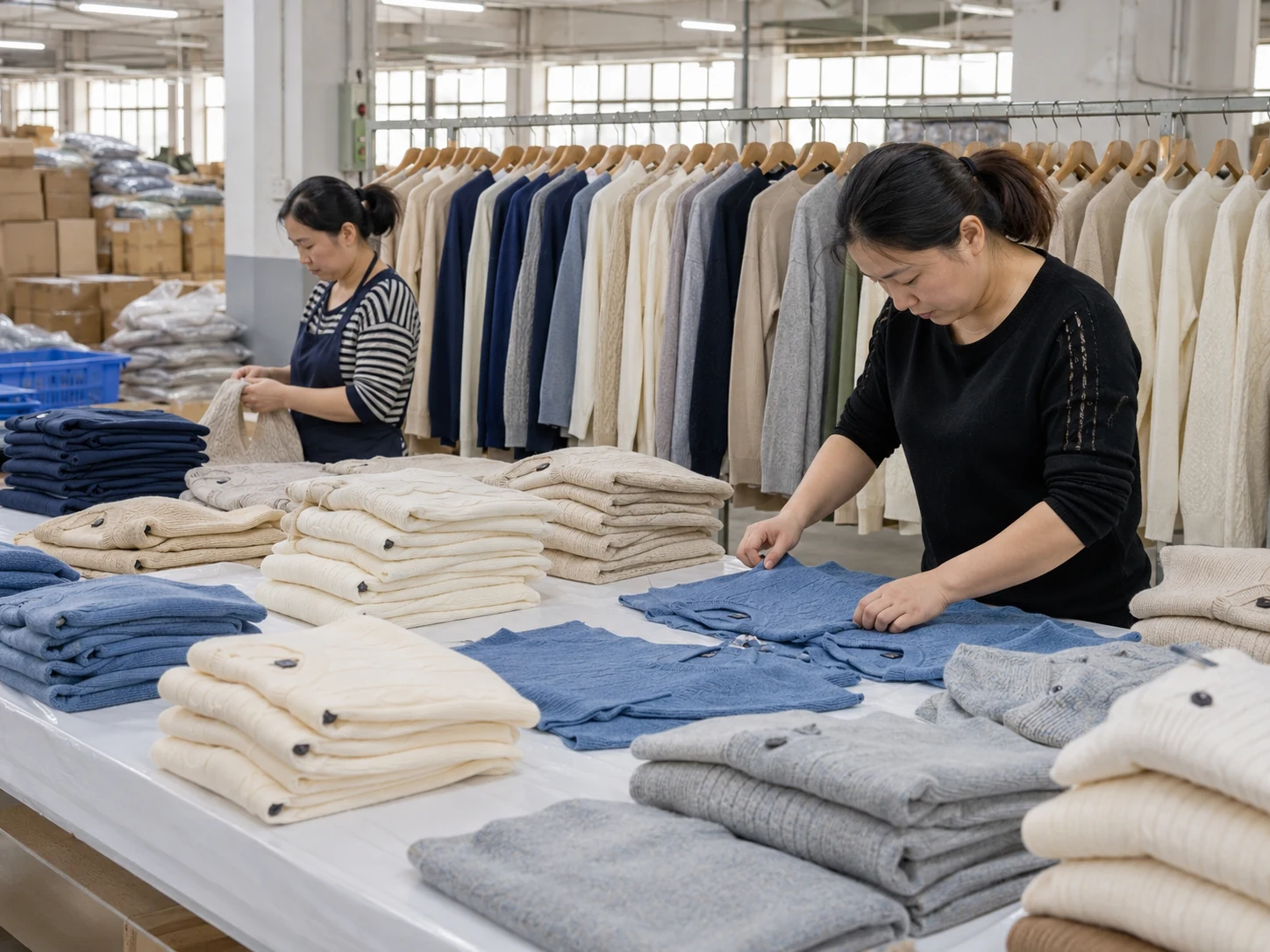
Final inspection should verify workmanship, appearance and order requirements before packing.
You can review our knitwear production and quality control process to see how development, sampling, production, inspection and packing fit into the complete manufacturing workflow.
7. Evaluate Development Ability, Not Just Production Capacity
Production capacity matters, but a strong OEM or ODM supplier also needs technical development ability. Fashion brands often arrive with different levels of information: some provide a complete Tech Pack, while others begin with a reference garment, sketch or image.
A capable development team should be able to work through questions such as:
- Which yarn best matches the target hand feel?
- Which gauge is most appropriate?
- Can the requested stitch structure be produced reliably?
- Does the pattern need adjustment after the first fitting?
- Which construction method is suitable for the neckline or shoulder?
- How should custom labels, embroidery or other branding be incorporated?
For brands requiring development support, CZ Knitwear works as an OEM / ODM knitwear manufacturer , supporting technical evaluation and yarn selection through sampling, bulk production and quality control.
Brands developing sweaters specifically can also review our custom sweater development and manufacturing capabilities .
8. Look for Manufacturing Transparency
Quality claims are easier to trust when a supplier can explain how products are actually developed and manufactured. Buyers should look for clear, consistent information about factory capabilities, machinery, sampling, linking, QC and production planning.
Useful signs of transparency include:
- Real production and factory images
- Clear descriptions of the manufacturing process
- Specific answers to technical questions
- Defined sampling and bulk production stages
- Clear communication about feasibility and potential risks
- Willingness to discuss production details before quoting
You can learn more about our Dongguan knitwear factory and manufacturing capabilities , including the production environment and the type of OEM / ODM development we support.
9. Ask About Capacity, Lead Time and Production Planning
Buyers planning larger programs should evaluate more than sample quality. They also need to understand whether a supplier can manage production scheduling, yarn preparation and multiple style developments without losing control of quality.
Useful questions include:
- How many styles can be developed at the same time?
- How is production capacity planned during peak season?
- When should bulk yarn be booked?
- How are repeat orders scheduled?
- What happens if the sample needs several revisions?
- How are larger multi-style programs coordinated?
For many custom developments, sampling may take approximately 7–15 days, depending on design complexity, yarn availability and required revisions. Bulk production may commonly require approximately 12–45 working days after sample approval, depending on order size, material preparation, production scheduling and finishing requirements.
A mature sourcing decision should consider whether the factory can support the next stage of your brand—not only whether it can complete the first sample. Production planning becomes increasingly important when styles, colors and order volumes grow.
10. Questions to Ask Before Choosing a Knitwear Manufacturer
Before committing to a bulk order, use the following questions to evaluate how deeply a supplier understands knitwear manufacturing.
| # | Question to Ask the Factory | Why It Matters |
|---|---|---|
| 1 | Which machine gauges can you manufacture? | Shows whether the factory can support different yarn weights and garment structures. |
| 2 | How do you control yarn and color lots? | Important for bulk shade consistency. |
| 3 | How are measurements approved before bulk production? | Reveals whether the supplier uses a controlled approval process. |
| 4 | How is linking inspected? | Helps assess seam strength and finishing quality. |
| 5 | What happens when measurements fall outside tolerance? | Shows whether corrective procedures exist. |
| 6 | Can you work from a Tech Pack? | Important for technical OEM development. |
| 7 | Can you develop from a reference sample or image? | Useful for ODM and less-developed concepts. |
| 8 | What QC checkpoints are used during production? | Distinguishes a real inspection system from a general quality claim. |
| 9 | How do you maintain sample-to-bulk consistency? | Critical when order volumes increase. |
| 10 | What information do you need before quoting? | A professional supplier normally needs more than a reference image to quote accurately. |
Red Flags When Evaluating a Knitwear Supplier
- The supplier talks mainly about price but does not ask about yarn, gauge, measurements or construction.
- The factory cannot explain gauge selection or how the yarn works with the requested structure.
- There is no clear sample approval process before bulk production.
- QC is described only as “strict inspection” without explaining actual checkpoints.
- The supplier avoids technical questions or gives inconsistent answers about production.
- Bulk production is quoted immediately without enough information to understand the product specifications.
None of these factors alone automatically proves that a supplier is unsuitable. However, several together may indicate that the factory is approaching the project as a simple order transaction rather than a controlled knitwear development program.
Related Knitwear Manufacturing Resources
Learn how custom knitwear moves from design and yarn selection through sampling and bulk production.
Review the measurements, construction, workmanship and finishing points that should be checked before bulk production.
See the major stages from development and sampling to manufacturing, inspection and packing.
Explore custom sweater development for fashion brands and private label programs.
What Actually Defines a High Quality Knitwear Manufacturer?
A high quality knitwear manufacturer should be able to do more than reproduce the appearance of a reference sweater. The factory should understand how yarn, gauge, stitch structure, linking, measurements and finishing interact—and it should have a clear process for transferring an approved sample into stable bulk production.
For fashion brands, the strongest suppliers are usually those that combine technical development, transparent communication, measurable quality control and reliable production planning.
This becomes even more important as a sourcing program grows from one style into multiple colors, larger quantities, seasonal collections and repeat orders.